Showing posts with label ontology. Show all posts
0

Videogames and Sociology: Twitter's pic of the day summary (46-50)

This is the tenth round of Pic of the day RECAP (46-50). To understand what all of this is about, check out the original entry.

46 - Max Payne:  The American dream

Proud and confident. Almost invincible. That's how Max Payne felt before everything went south for him. Because it seems that when things take a turn for the worse they just go south, where all that is bad happens. "Is the American dream dead?" asked Crish Cillizza in a article published on the Washington Post. There's every likelihood that it is indeed dead. Over, like in the Rob Orbison's song. Kaput, like The Weimar Republic in 1933. In the end, all that middle class canned happiness was mostly bullshit. Advanced liberalism and post-Fordist capitalism are like those free-to-play games; you only win if you pay enough. And by enough I mean a lot.

47 - Amnesia: A Machine for Pigs  This world is a machine! A machine for pigs!


This world is a machine! Is that good or bad? Wait a moment, there is more. A machine for pigs! Well, that is more accurate. The world is a big, monstrous, relentless, and ruthless machinery inclined to crush any being that happens to inhabit its entrails. Don't be fooled. A machine for pigs is a more poetical way to refer to a slaughterhouse. And if it wasn't enough wrecking our bodies mercilessly, the machine also wants to break our souls, minds, wishes, ideas, hopes and anything that resembles humanity - that suspicious notion. Just watch all those greedy fascists governing and operating the machine. They're also pigs that will be equally devoured by the machine eventually; they have just decided to buy a little more time sacrificing everyone else in the process. 

48 - Octodad:  BLRBRLBLBRLBLRBLOOOOOOOO


BLRBR LBLBRLBL RBLOOO OOOOOBLR BRLBLB RLBL RBL OOOOOOO OWeberBL RBRLB LBR LBLRBL OOOO OOOOLatourBL RBR LBL BRLB LRBLO OOOOO OOSocialisationBLRB RLBL BR LBLRBL OOOO OOO ODurkheimBL RBRLB LBRL BLRBLOOO OO OO OETABLRBRL BLBR LBL RBLO OOO OOO OAgencyBLR BRLBL BRLB LRB LOO OOO OOOBourdieuBLR BRLBL BRLBL RBLOO OOOO OO BL RBRLBLB RLBL RBLO OOO OO OOMediationsBL RBRLBL BRLBLR BLOOO OOO OO BLRB RLBLBR LBLRB LOOO OOO OOB LRBR LBL BRLBLR BLOOOO OOOORajoyBL RBR LB LBR LBLRB LOOO OOO OOB LRBR LBLB RLBLRBLO OOO OOO OStructuractionBLRBR LBLB RLB LRBL OOOOOO OOBLR BRLBL BRLB LRBLOO OOOO OOEpistemology BLR BRLBL BRLBL RBLOO OOOO OOGiddensB LRBR LBLB RLBLR BLO OO OOO O

49 - Metro 2033: Light! Someone must be there


Have your ever heard that epistemological crap about the smoke and the fire? You know, if there is smoke, that will be the sign of the existence of a fire and so on and so forth. Well, we tend, not always fortunately, to interpret reality in those terms. Look! Light! Someone must be there. Look! Water! There must be a leak. Look! Lipsticks traces! A woman must have been drinking from this glass. Listen! A dog is barking! Someone must be trespassing. We should deal with those signs as the character in the screenshot: with suspicion and, preferably, drawing a firearm.

50 - The Binding of Isaac:  Faith Up!


I often think that video games just copy their mechanics from reality. After all, is not what really happens in real life? Whenever we finish counting the beads of our rosary, faith up! Wherever we visit a church, faith up! Whoever prays to a god, faith up! Whichever sermon you hear, faith up! That also works in the opposite direction, all those things that make our faith go down. All in all, we all have a lifebar or a certain amount of health points, we collect coins and have keys. Some even have guns and bombs. And we try to level up as much as we can in order to overcome any barrier we might find in our paths and to defeat the new boss (sometimes literally) that impedes our progression in life. Doubtlessly, we need as much faith as we can get.

Previous entries:
0

Videogames and Sociology: Twitter's pic of the day summary (41-45)

This is the ninth round of Pic of the day RECAP (41-45). To understand what all of this is about, check out the original entry.

41 - Max Payne 3:  There was always something rotten in the air
In one of the most wonderfully unsettling scenes in the history of TV series, an aged agent Cooper sits in the centre of the Red Room accompanied by The Man from Another Place (a dwarf in a red suit) and a ghostly Laura Palmer. Actually, it's not the most unnerving sequence of Twin Peaks, but in that weird dream-like state takes place a very chilling short conversation: "Where we're from, the birds sing a pretty song and there's always music in the air". Is this a metaphor of the fact that Laura Palmer lies in her grave? Are the birds the ones singing in the cemetery? Is the music in the air the cracking sound of the casket slowly collapsing under the weight of soil? When an also aged Max Payne pronounced those similar words, "there is always something rotten in the air", everything became crystalline. "Of course," I thought, "there are always music and something rotten in the air because we all are living in our own grave". And that grave is society.

42 - Moebius: Empire Rising:  What exactly is my destiny?

Destiny is about the future. What will I be doing? With whom?  Where? In sum, who I will be? Destiny is fate, ergo, it belongs to the realm of what remains uncertain. And uncertainty is a powerful emotion. It makes us anxious, restless, frightened. That's the reason why we keep asking the question to ourselves, even if we do it out loud in front of one of our peers. The question is aimed at us and we already know we can't answer it. But we keep trying, in the fond hope that its reverberation echoes through our daily life anxieties and helps us to overcome the deep feel of uncertainty that once was shallow but now is almost unbearable. What has this to do with sociology? Almost everything. A sociologist is, among other things but mainly, a tracker of destinies. The problem is we are better tracking actors' past and present destinies than the future ones. The real destinies are for fortune-tellers, prophets, groundhogs, meteorologists, peasants and, sometimes, for deputy directors and ministers for pensions.   

43 - Arma III:  Keep landing zone clear at all times

There are several reasons why we should keep a landing zone clear at all times. The main reason, though, seems to be pretty obvious: to avoid uncomfortable encounters between aircraft and whatever might be on the landing zone. However, the command falls into a paradox. If the landing zone must be clear at all times, how are aeroplanes and helicopters supposed to land on the designated area? In case they touched down, they would be occupying the landing zone and, here's the paradox, it wouldn't be clear anymore. Therefore, the landing zone is both a physical space where aircraft land and a symbolic one where there is the possibility of aircraft landing. When an actual plane lands, it uses the physical space, fulfilling (and destroying temporarily) the potentiality of the symbolic space. The social is quite similar, physical and symbolic at the same time, and full of paradoxes that sustain the fundamental fabric of what we call society, identity, meaning or individuality. Hence, keep the ground of the social clear at all times but don't forget to always occupy it as well.

44 - Catachresis: If only you were not under that veil

If only you were not under that veil. If only you were not so far away. In only you were not underground. If only you were not on the other side. If only you were not occupied. If only you were not afraid. If only you were not married. If only you were not a policeman. If only you were not dead. If only you were not saying if only at all times. All these are wishes that yearn for a particular reality to be different. They all have in common that are enunciated using a negative structure, wishing that things were not as they are right now. This reminds me of all those sociologists who are always projecting their wishes over reality, trying to get rid of those aspects they interpret as being a nuisance for their work. The most common metaphor used is that of the veil. These sociologists insist on unveiling what is behind the mask, erasing the layer that distorts the truth hidden by reality. It is surprising how these scholars haven't found yet that there is nothing beneath the veil; that reality is wide open and available to whomever wants to have a look.

45 - Injustice: God Among Us:  But Let's think bigger
There is a global tendency in the circles of self-help gurus that encourage us to think always bigger. We live our meaningless and aimless lives without knowing that we could (and should) think bigger. Escape from one of Weber's worst fears, the iron cage in which we are confined nowadays. It might not be the Kafkaesque bureaucratic nightmare that he envisaged in his The Protestant Ethic and the Spirit of Capitalism (2003), too far to foresee the havoc created by financial capitalism and its neoliberal political rationalities, but it is still a symbolic prison, in the end, the worst kind of jail for an individual. Then, we think bigger, but after doing so, we are still inside the cage. What did we do wrong? Well, just focusing on the bigger picture is not enough. Sometimes it's good to think bigger; we must know the things that surround us can only be explained by other things that are somewhere else both in space and time. However, we should also think smaller: the iron cage exit is not beyond its bars, it's closer than we think, in the details. Those details that explain and make possible those big ideas. Once you master how to think bigger and smaller at the same time, only then, you will be free.

Previous entries:
0

Videogames and Sociology: Twitter's pic of the day summary (36-40)

This is the eighth round of Pic of the day RECAP (36-40). To understand what all of this is about, check out the original entry.

36 - The Forest:  I love my guts
This out of proportions love for himself might be interpreted in two, kind of related, ways: one in a metaphorical sense and the other as quite literal. According to the former, he may be referring to his determination and boldness. Who does not love the strength to face obstacles and rise to the challenges? But the guy is actually lying - presumably dead - on a table in the middle of a dark cave. If that careless daredevil attitude got him in there in first place, why would he love those stupid guts? However, if he is alluding to his actual guts - those that we can observe sprouting from his belly, that's, at best, ironic. If fact, everything is just based on a false premise: that the guts were in the T-shirt before they were pulled out. Just like society: did it exist before sociologists say it was there? There's an important difference, though. I would never say 'I love my society'.

37 - Free to Play:  Gaming will be the death of you one day
If your aunt prophesies your death by the hand of gaming - and this happens in the film Free to Play (the prophecy, not his demise) - then you should start worrying (I would!). But since she doesn't specify what type of death awaits him, we can only speculate about it. Is it a social death? Gaming has traditionally been linked to social isolation, but lately, and Free to Play is a good example of this tendency, gaming has become mainstream. Is it a professional death? That's more likely, because if he wants to succeed in a eSports career, his time as a pro player will eventually come to an end. Nevertheless, he will still be able to work in other areas (related or not to gaming). Is it a final biological death? There have been reported some ludicrous deaths because of playing video games, but unless he spends more than two days in a row playing uninterruptedly while he solely drinks Mountain Dew (and, to be honest, we don't know if he actually does this), he's not going to die any time soon due to gaming. There is still one unexplored death. That of the inner self. The soul, say some. The subject, say others. In that case, he's already dead and is probably unaware of it.

38 - Faster Than Light:  Intruders detected
No matter how far we are from our local coordinates, spatial and temporal, we will always make distinctions between us and the others, the local and the foreigner, our own and the outsiders. Groups, nations, countries, factions, communities, guilds, gangs... wherever and whenever a collective of individuals exists, there will always be people seen as the intruders, which are fundamental to the definition of the group: its constitutive outside. 

39 - Penumbra - Black Plague:  There cannot be one, there can only be us all
I never get tired of a good old agency-structure debate. Is the individual detached from society a possibility or is just an illusion, a trick played by the collective imagination that creates it? Is society just the outcome of the addition of several individuals or is it something greater than the sum of its 'parts'? What the hive - that collective mind - says in the video game Penumbra is true and false at the same time. We, the sociologists, have been fighting this war for more than a hundred years. Too many casualties, too many efforts to solve the problem. Giddens's structuration theory (1984), Bourdieu's theory that links habitus, field and capital (1998) or Berger and Luckmann's description on how social reality is constructed (1967) have been some interesting and, to certain extent, successful proposals to overcome this problem. I particularly like Latour's elegant approach: "the social possesses the bizarre property of not being made of agency or structure at all, but rather of being a circulating entity" (1999: 17). 

40 - Far Cry:  Stay low and avoid contact if possible
How many times have we been given this sort of advice? Stay low, don't stand out. Avoid contact, people are dangerous. Is the man lying motionless on his own blood one of those who tried to step out of line? What if he was the one who played by the book and the one holding the gun is the smart guy who didn't listen to the same old story? You can try to avoid contact, but reality is all about connections. No escape there. And sometimes, staying low is precisely what attract all that unwanted attention. Here's my tip: stay low if you are passing behind a low ceiling and avoid contact in case there are sparks coming from it or you see a politician reaching out his hand.

Previous entries:
Videogames & Sociology: Twitter's pic of the day summary (11-15)
Videogames & Sociology: Twitter's pic of the day summary (16-20)
Videogames & Sociology: Twitter's pic of the day summary (21-25)
Videogames & Sociology: Twitter's pic of the day summary (26-30)
Videogames & Sociology: Twitter's pic of the day summary (31-35)

Bibliography
  • Berger, Peter L. and Luckmann, Thomas (1967). The Social Construction of Reality: A Treatise in the Sociology of Knowledge. New York: Anchor.
  • Bourdieu, Pierre (1998). Practical Reason: On the Theory of Action. Stanford: Stanford University Press.
  • Giddens, Anthony (1984). The Constitution of Society. Cambridge: Polity Press.
  • Latour, Bruno (1999). “On recalling ANT” en Law, John y Hassard, John. Actor-Network Theory and after. Oxford: Blackwell, 15-25.
0

Videogames and Sociology: Twitter's pic of the day summary (31-35)

This is the seventh round of Pic of the day RECAP (31-35). To understand what all of this is about, check out the original entry.

31 - Doom 3:  That way

We are always compelled to behave in a certain manner by different forces (invisible or not). Some of them are subtle, like the smell of  recently baked pies. Others are more direct, like a panel in a road which gently reminds you that your speed is being checked by radar. Of course, there are those that are extremely persuasive, like the one we are able to see in the picture: an armed soldier telling us that we must go that way. He doesn't even sweeten his mandate a little bit with a "would you mind..." or a similar grammatical construction that could show a shred of politeness. We're talking about power here. I
n Foucaldian terms, conduct of the conduct. The most interesting thing of Foucault's notion of power, apart from its relational nature and its link to knowledge, is that there wouldn't be power without freedom. Power exists because you have the chance of not following what is asked of you (directly or indirectly). In fact, if you have a gun pointed at your head, that's hardly a power relationship (although you still have the freedom to cry "shoot!"). When someone does something after having the opportunity to do several other things, then, my friend, that's power.

32 - Papers, please: Papers, please

Speaking of power, let's talk about the power of inscriptions. According to Latour, who initially borrowed the notion from Derrida, inscription is "a general term that refers to all the type of transformations through which an entity becomes materialized into a sign, an archive, a document, a piece of paper, a trace. Usually, (…) inscriptions are two dimensional, superimposable and combinable" (1999: 306). I could write words and more words on inscriptions and their importance in life in general and in science in particular. However, I will focus on the particular transformation that entails ID documents such as passports, work permits, visas, national identity cards or driving licences. What do they all have in common? They're papers (well, some of them are more plastic than paper but that doesn't matter here), yes, but very specific ones: they all translate an entity - your body, your life, your skills, in sum, your identity -  into a bidimensional document. It's all there: when you were born, your sex, your name, your address, your likeness, your marital status, your occupation, your ability to drive, to work, to reside. But like any other kind of translation, there is not just a simple correspondence between what is being translated (basically, you) and the translation (the inscription). Everything is transformed in the process. Don't you believe me? Play Papers, please or just try to enter in a foreign country without the required documentation. After all, if those papers are just a plain translation of you, and you're already there, why should you need anything else? And then it's when you start thinking that your body, your identity, yourself might be actually the translation of those inscriptions.

33 - Fez: Reality is perception
Fez is, among other things, about the reality of the real. If we state that reality is perception, we are suggesting that reality is, at least to a certain extent, what we think reality is and not what is just out there. This sounds like ontology to me. But far from the philosophical debates in which the notion of ontology is born, I prefer to use a more practical definition. For instance, García Selgas considers that what "allows us to talk about ontology is not the aspiration of drawing the being of things, but the acknowledgement that every scientific theory entails a specific model of what it deals with" (2003: 29). Substitute "scientific theory" for "theory" or just "personal perception" and, voilà, you are there. Nevertheless, remember that perception is just that, an assumption of what reality is, not reality itself (if there's any). Be specially careful with walls, gravity, policemen, boundaries, grumpy old people, wet floors, and other regular impersonations of the real. Don't go wild just because it's all about perception.

34 - Outlast: Witness

Witness. Is the word written in blood referring to the noun or the verb? If it's the former, who is the witness, that dead guy sitting on the loo? In that case, is that bloody graffiti trying to convey the message the dead of the witness? But is it referring to that particular witness or the witness as a social figure? That would be an interesting interpretation: the witness, a dead body with his head between his legs, is lost in one of the darkest corners of reality, those of its wastes. He's not witnessing any more. And if there is no witness to observe the events that are happening in reality, who would produce narratives of them? Will they stop happening because there is no one watching? Even though this might be seen as a creepy scenario, in my opinion, there would be a more unsettling one: that it is a verb, an imperative: "witness!". You would be situated in the position of the witness, forced to watch and trusted with the responsibility to give testimony when the time comes. And there is no bleaker situation than witnessing the end of witnesses. 

35 - Gone Home: You can do better

You can do better, you can always do better. But what about doing worse? Because there is also always space for doing things far worse. Would we say things like "I try hard but it doesn't get any worse"? Or should we say something like "I don't try anything at all but things keep improving"? It might seem odd, but there are a few reasons why we should try doing things worse, at least as an experiment. One of them would be to prove we are in control of things: if you are not able to worsen what you did before, this could mean that your achievements are due to external factors and not as a product of your determination and expertise. Another reason would be to look more human and less conceited. Because nobody wants to hear that they are too good to be true (unless they're in a song). And finally, probably the most important reason to do worse: to do better later on. In the end, worse and better only make sense in relation to each other. 

Previous entries:
Videogames & Sociology: Twitter's pic of the day summary (11-15)
Videogames & Sociology: Twitter's pic of the day summary (16-20)
Videogames & Sociology: Twitter's pic of the day summary (21-25)
Videogames & Sociology: Twitter's pic of the day summary (26-30)

Bibliography
  • García Selgas, Fernando J. (2003). “Hacia una ontología de la fluidez social”, Política y Sociedad, 40 (1): 27-55.
  • Latour, Bruno (1999). Pandora's Hope. Essays on the Reality of Science Studies. Cambridge Mass.: Harvard University Press.
0

Videogames and Sociology: Twitter's pic of the day summary (26-30)

This is the sixth round of Pic of the day RECAP (26-30). To understand what all of this is about, check out the original entry.

26 - Broken Sword 5: The Serpent's Curse:  Can we ever truly know another human being? 

Not that I'm a functionalist, but what is the social function of rhetorical questions? What is the reason we ask questions that we don't expect to be answered? Is it self-awareness of our conditions of possibility, that is, the limits of what can be thought and known in a particular epoch and cultural context? Are they pointless statements of a meaningless discourse, void of any real social purpose? Have I just posed a series of rhetorical questions myself ? In my opinion, they are quiescent screams of horror destined to silence our fears to the unknown. Or maybe it's just an excuse to practice some cheap existentialism. So, can we ever truly know another human being? If there's one thing I'm sure of is that you'll never be able to truly know anyone, or anything for that matter. Not at least with sociology, monsieur. 

27 - Slender: The Arrival: Can you see it?

In his reflections on the Foucauldian notion of dispositif, Deleuze described one of its dimensions, the curves of visibility, as the lines of light that let us see by forming different shapes, which are inseparable from the dispositif in question. Thus, each dispositif  distributes "the visible and the invisible" (1992: 160), what we can see and cannot. It's important to emphasise that those lines of light don't just fall upon pre-existing objects, the light is helping to create them. Therefore, when we are faced with the question Can you see it?, we should ask ourselves if the social apparatus in which we dwell is letting us see it, whatever that is, an in what shape. Sometimes, there are things we don't want to see - i.e. the Slenderman - but the dispositif keeps projecting those shapes in front of us. Is there any way out of it? Yes, Deleuze also delineated them: the lines of subjectification, the lines of escape. It's the dispositif escaping from itself, breaking its regimes and boundaries. Of course, after that, new social apparatuses will be established,  imposing new curves of visibility, which includes all sorts of Slendermen and other, fantastic or not, dark creatures.  

28 - Dinner date: Perhaps I should give it up, move on
We tend to cling to what we think it's true, even if we have plenty of evidence in support of its spurious nature. Most of the time it's because we're used to it or are afraid to change or improvise. We might come to assume the lack of truth in what we believe, but we still hang on to it. Those moments in which including the most recalcitrant constructivist endures the heavy weight of the social structure. Why do we keep doing things we know that are a dead end? Why don't we give up and move on? It might be the hope of a highly improbable (positive) denouement. Eventually, you'll move on or the structure will do it for you.

29 - Portal: The cake is a lie

There are white lies and half-truths. There are also blatant and downright lies. Some people would feel ashamed of telling a lie,  even a harmless one; others would do it barefacedly. No matter what type or how they're delivered, lies are told all the time and are part of our social landscape. Let's face it, lies are a fundamental pillar to sustain the well-being of our societies. A world without lies would be as bad as one full of them. Try to be honest everywhere at any time and you'll see what I mean. Although necessary, there are cruel heartless lies that can be devastating. Those that are pregnant with broken promises of a better future, a endless love, or a delicious cake. The ones involving cakes, those sweet pieces of heaven, are the worst of them.

30 - Aliens Colonial Marines: Caution, quarantine area

Quarantine. What an interesting concept. Like a laboratory or a heritage site, quarantine suspends the current socio-material conditions of existence. In this case, we're not testing reality to know more about it or trying to experience what cannot be experienced any more; it's all about controlling an epidemic. Quarantine implies, therefore, the temporary closure of a space in order to isolate an area, an ecosystem, a population. The main aim of quarantine is to prevent an outbreak of a particular disease. What if quarantine was applied to broader social aspects of reality such as ideas, patterns of behaviour, cultures, or rules? Then you realise that the social structure is a big quarantine area continually trying to hold the winds of social change. Obviously, like in all those films and video games - and because every quarantine always comes to an end, it's only a question of time that the quarantine area is breached. 

Previous entries:
Videogames & Sociology: Twitter's pic of the day summary (11-15)
Videogames & Sociology: Twitter's pic of the day summary (16-20)
Videogames & Sociology: Twitter's pic of the day summary (21-25)

Bibliography
Deleuze, Gilles (1992). "What is a Dispositif?" in T.J. Armstrong (ed). Michel Foucault Philosopher. Hemel Hempstead: Harvester Wheatsheaf, pp. 159-168.
0

Videogames and Sociology: Twitter's pic of the day summary (21-25)

This is the fifth round of Pic of the day RECAP (21-25). To understand what all of this is about, check out the original entry.

21 - Glitchhikers: We're surrounded by possible connections all the time 

You probably won't find a more straightforward truth in this section. We're surrounded by possible connections all the time. Amen to that. What's more, not only are we surrounded, we are also covered, traversed and flooded by those connections. We walk on connections. We walk thanks to connections. What the hell, we are connections too! Connections of connections, that's what we are. That's what the social is: a contingent articulation (that is, a set of connections) of heterogeneous elements.

22 - The Black Mirror 2: Did I see a ghost?

How many times have you asked a similar question to yourself? Was it real? Did I image that? Was all that a dream? Did I lock the door? The fact that we are asking ourselves about something that has just happened and only us can answer is odd at the very least. If you didn't notice the first time, why are you asking again? It is commonly believed that those are just rhetorical questions, that we already know (or not) the answer. In both cases, why ask then? Good question. Do I have to explain to you why I cannot answer it? So, Did I see a ghost?

23 - Thief Gold (The Dark Project): Stay in the shadows, avoid the light
Light casts shadows, which means that without light wouldn't be shadows. Therefore, shadows are extensions of light. Are shadows and light different states of the same reality? If so, does staying in the shadows equal to staying in the light? Is it possible then to follow the mandate of keeping off the light and embracing the shadows without coming into existential contradiction? Since I'm not a a physicist, all what I've just written might be nonsense. But if we consider this as a metaphor of how we represent reality, we may we able to work around the paradox. We shed light on the pieces of reality we want to know better with our methods of representation. That way of proceeding leads us to produce knowledge about what surrounds us, but also obscures other parts. The illuminated areas are what we think about reality while the dimmed ones are what we ignore. Hence, staying in the shadows could be a good way to approach reality differently. To know what is unknown. Be warned, though: you will cast a new spectrum of shadows and lights.

24 - Cognition: You made the same fucking mistake twice?!

Have a look at the picture. What do you see? An angry woman. An accusing finger. A man in a defensive posture. Some papers on a table. And some f-wording. How did we get here? It seems that someone made the same mistake twice. That's John, the guy trying to protect himself from that menacing finger. Who's behind that finger? Erica Reed, a detective with an unusual but useful gift: she can see the past when she touches something or someone. Now we understand why John is afraid of her finger. As if he, like the rest of us, made the same damn mistake just twice!

25 - Super Hexagon: Level up

Most of the time video games are about levelling up. Rising to the challenge. Beating the boss. Hitting the high scores list. Completing stages. Overcoming adversity. Increasing our skills. Video games are tales of success. Now think how all that could be easily applied to life in general. And how you are on the Pentagon level of a game called Super Hexagon. We all are. Do you see it now? No? Try again. Most of the time video games are...

Previous entries:
0

Videogames and Sociology: Twitter's pic of the day summary (16-20)

This is the fourth round of Pic of the day RECAP (16-20). To understand what all of this is about, check out the original entry.

16 - The Elder Scrolls: Oblivion: The stars were right, and this is the day

The stars were right. Is he referring to those who are famous and popular or to those massive celestial bodies? For those like me who have an open definition of agency, which includes humans and non-human as agents alike, it may get confusing sometimes. It doesn't matter, though. At least in this case. The important thing is the certainty of his discourse: this is the day. I hope I have his aplomb when my time comes. Nothing is perpetual. In the end, the stars were right and they know from experience: even the brightest star, earthly or celestial, will eventually fade.

17 - Dead Island: Give Way

"Change is always difficult," we say to ourselves. It can be difficult, indeed, but it happens all the time. Stability and solidity are mere contingent outcomes of the constant flow of change. Very real, but perishable. At the crossroads of times we are impelled to think fast and act quicker. Bob Dylan already warned us: "Your old road is / Rapidly agin' / Please get out of the new one / If you can't lend your hand". Times they are a changing and the end is nigh. Are you willing to change? If not, please, give way.

18 - Super Meat Boy: Press start
Is there something more game-like that the "press start" imperative? Maybe the dreary "game over" sentence. The alpha and omega of video games. It's interesting because they don't command you to just "start". Video games clearly state that you have to press start, as if you had to put pressure on the video game to make it into existence. Someone might point out that the "button" word is implied. I don't like taking things for granted. There is a negotiation between you, the player, and it, the video game. Once you press start, it's like signing a contract. Your relationship, even if it doesn't last more than five minutes, will change both of you irreversibly.

19 - Deadlight: Everybody reacts to fear differently

Everybody reacts to fear differently. That's true, but everybody reacts to everything in different ways. It always is, it always has been. Will it be? Sure. However, fear is a strong feeling and the reactions can be extreme. "I'll kill you, freaks!" we can read on the wall. It's not surprising at all. Otherness is what we fear the most. Remember, with the proper mediations even your neighbour, the person who sits next to you or yourself might be turned into a freak, an outsider, an alien. And then fear. And then reactions.

20 - The Witcher: An edifying tale...

Geralt of Rivia is being polite by describing as edifying the story he has just heard. In fact, this can be read as a meta-reference to this very section on this blog. If his words were subjected to translation, I would say he means the following: "I've been reading your digressions about video games and sociology, and I've come to the conclusion that they're just gibberish wrapped in a pretentious inane discourse". But Geralt doesn't want to sound impolite, so he says that my section is an edifying tale. All these years delving deeper into the mysteries of deconstruction, destabilising the hegemonic narratives and learning the arts of articulating heterogeneous elements, and he concludes that the section is "edifying" pretending to be polite. If you wanted to be polite, you could have used plenty of adjectives. Anything but "edifying", Geralt. Anything.

Previous entries:
0

Videogames and Sociology: Twitter's pic of the day summary (11-15)

This is the third round of Pic of the day RECAP (11-15). To understand what all of this is about, check out the original entry

11 - Superbrothers Sword & Sworcery EP: Home is where the hearth is
If we understand hearth as the floor of a fireplace in a house, we might be inclined to consider that home is just either a cold and dusty place or a warm and smoky one. Like most social relationships, all depends on whether the fire is lit or not. The other option is to consider hearth in its metaphorical sense as home and family. Therefore, Home is where home is. That's redundant. Sociology, as social actors - human and non-human - always do, should prioritise literal meanings over metaphorical ones.
 
12 - Crysis: What the hell is going on out there?
We tend to think in terms of opposing dichotomies: above and below, left and right, nature and culture, action and structure, life and death, in and out. Most of the time those notions only make sense if they're put together. That should be interpreted as a sing of its spurious nature. If we're at home and hear a thunderous sound coming from the street, we say 'What the hell is going on out there?'. If we're in a haunted house and glimpse a spectral figure walking down the corridor, we shout 'What the hell is going on out there?'. If we're social scientists outlining a research project, we think 'What the hell is going on out there?'. There is no such a thing as an out there, it's only a matter of distance, magnitude and mediation.
 
13 - Super Street Fighter IV: You're early 
People usually get angry when other people are late. It seems, but it's not completely corroborated, that people also can be mad at other people if they show up earlier than expected. What does this teach us from a sociological point of view? Things always happen on time. It's just that its time doesn't need to coincide with yours.


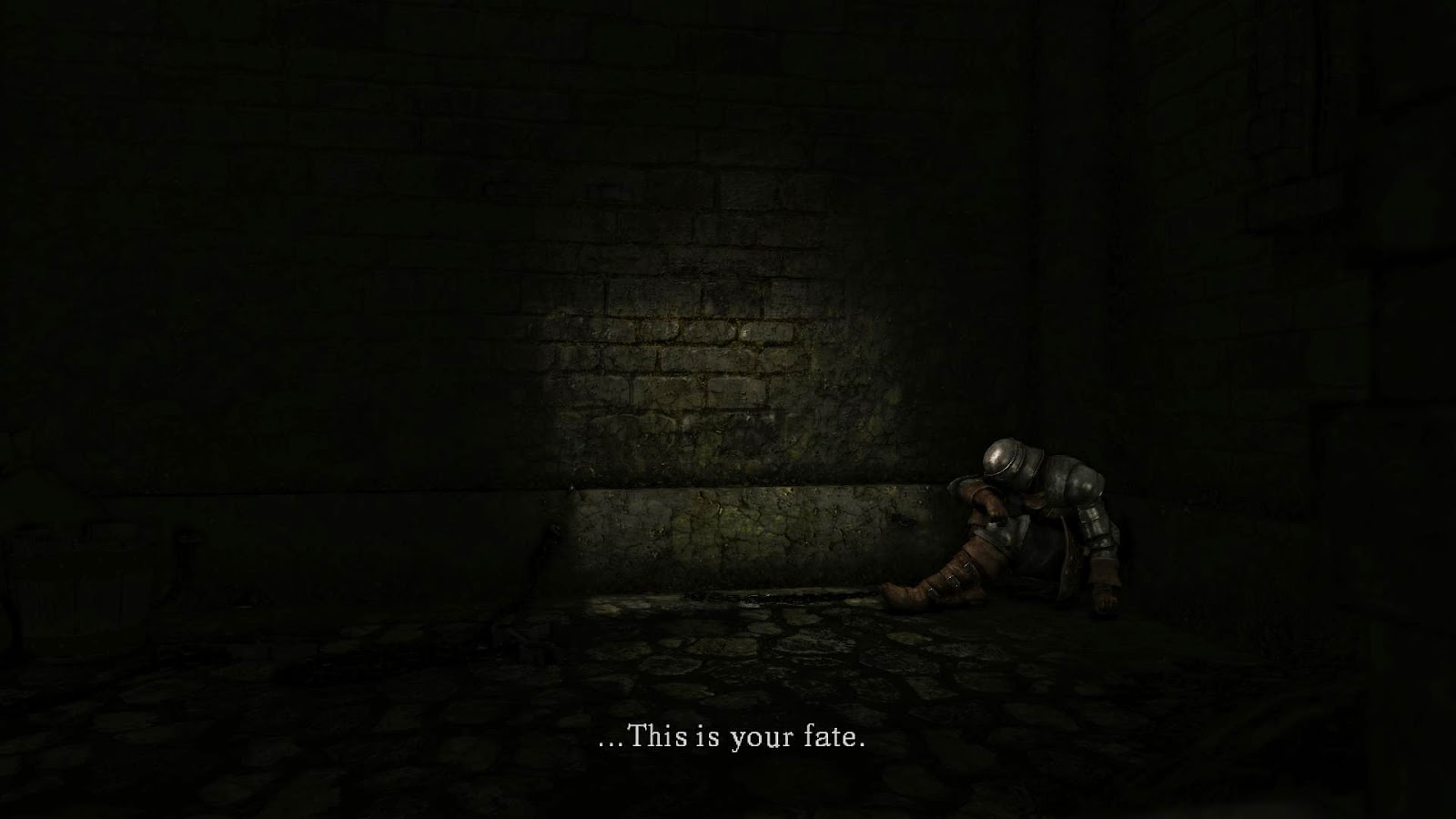
14 - Dark Souls: This is your fate
Fate relates to all that is already written, foreseen and foretold. It's about destiny and the inevitable. Fate is what controls you like a puppet. In sum, fate is much like the structure, the habitus, the limits of the system, the dispositif, or the constrictions imposed by other social agents. Don't worry, as oppressive and bleak as your situation might seem to be, there is always room for some good old free will: agencies, arrangements, shady deals, plays, tricks, detours. We also play a role in our fate and, more importantly, our actions are part of other people's fate.
  
15 - Spec Ops: The line:  Too many lies
When a specific number of lies becomes too many? Is not just one lie enough? Why are we worried about lies when there is a guy holding an assault rifle (or is it a shotgun?)? Amidst the lies and the guns we can spot the news. You can figure out the rest.


Previous entries:
0

Videogames and Sociology: Twitter's pic of the day summary (6-10)

This is the second round of Pic of the day RECAP (6-10). To understand what all of this is about, check out the original entry

6 - The Secret World: The end of the world waits for no man

The end of the world is the passage of time and what it comes with it: decadence, death, oblivion. Furthermore, only the signs of ageing prove the existence of the passage of time. The statement is partially wrong nonetheless: it waits for no man, indeed, but also for no animal, object, building or custom. In any case, there are still the possibility of (more or less) good outcomes after the end of the world: you can be turned into a myth, a social institution or cultural heritage. 

- Amnesia: Oh my... so Babylon shall fall, you say

We could interpret Babylon as the reflection of world's evil. But the ancient city's metaphorical prowess shouldn't be circumscribed to evil. Babylon is everything - a marriage, a car, a government, a culture, a theory -  that was, is and will be. It's another word to describe gravity: they all rise and, sooner or later, shall fall.

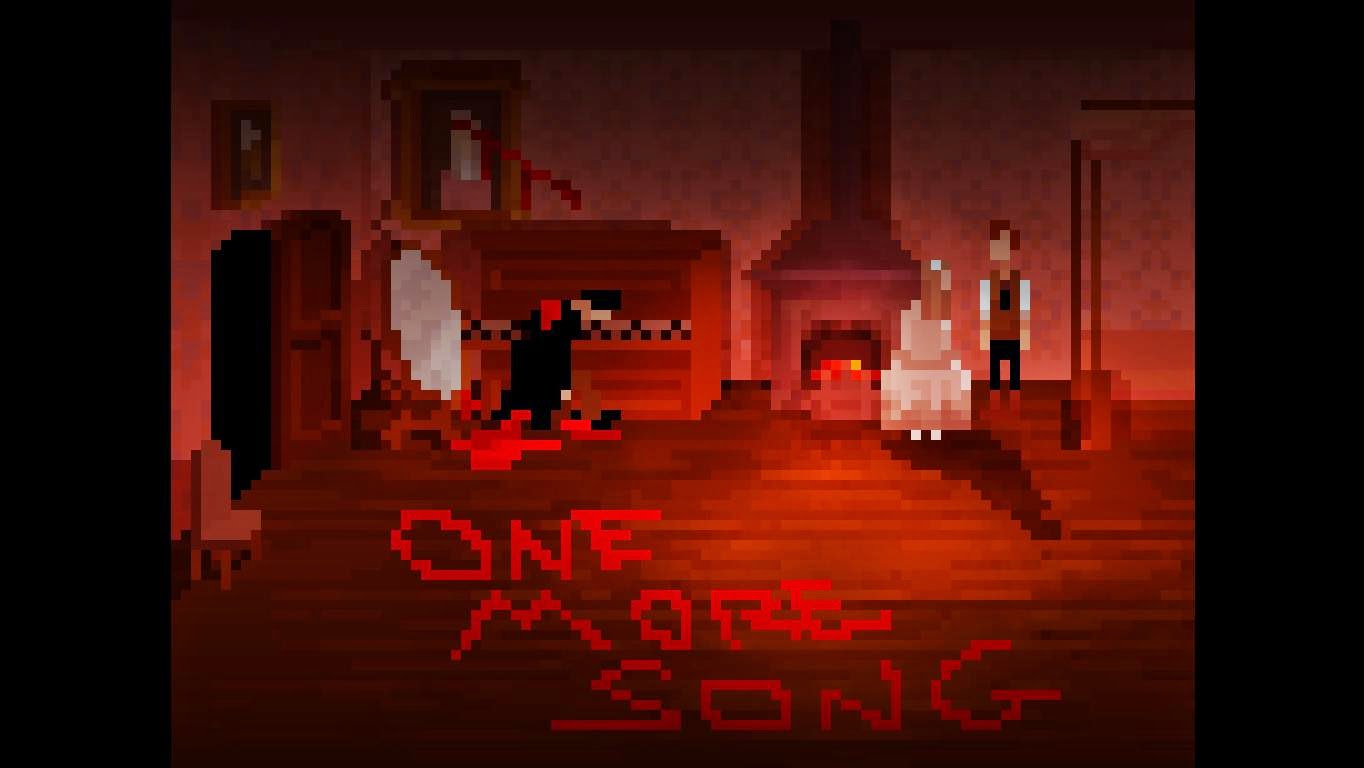
8 - The Last Door: One more song

One more song. One more episode. One more play. One more cup of tea. One more kiss. One more bit of chocolate. One more joke. One more apricot. One more cigarette. One more pint. One more one more... No matter what 'one more' you ask for. One more and it will finally kill you.

9 - Assassin's Creed: Nothing is true, everything is permitted

The assassin's rule of conduct is formed by two different, not necessarily related, statements. The first one, nothing is true. I would be tempted to say the sentence is true, but then it wouldn't be true what I was saying. Let's try a Foucaldian approach: we are faced with games of truth. Regimes of what can be said and what can be seen within specific conditions of possibility. In fact, the second statement, everything is permitted, is a gentle reminder of the contingent nature of those regimes of truth: it's what incites us to push the limits of thought and overcome the current conditions of possibility (creating new ones). 


10 - Call of Cthulhu: Dark Corners of the Earth: Innsmouth? Never heard of it

The dark, forgotten and damp - because everything in Lovecraft's universe is clammy - village of Innsmouth represents the uncharted territory of the unknown. From time to time we receive clues of those unheard realities in the shape of phone calls, hunches, whispers, premonitory dreams or letters to the editor. Seldom do we notice those signs, but eventually someone will do and Innsmouth will have to change its location.

Previous entries:
Videogames and Sociology: Twitter's pic of the day summary (1-5)