0

Flash Sociological Reviews: Gone Home (part 2: personal experience)

This is the second part of my first Flash Sociological Review, focused on my gameplay experience of Gone Home. Check here to read the first part (the media). All what you are going to read in this post was written right after I finished the game. There might be some minor corrections and one or two meta comments but, overall, everything is based on first impressions. SPOILER alert, be careful.

A meaningful experience based on the manipulation of the traces left behind
I've been dragged by a very powerful narrative, the one developed in Gone Home. Not only is it about that narrative, it's also about how it intertwined with the gameplay. The feeling of being myself the one that is unfolding the story that is wrapped in that house is very intense. I experienced a lot of things, I've been making up different stories as I was examining the house and the traces left behind. I thought something terrible happened to Sam, to the family; have their parents got divorced? have her father killed her mother? I also believed that Sam and Lonnie committed suicide! (it seems to be a recurrent thought on other players). 

Why do I get to think all those things? Even though there is sometimes a voice-over that narrates some of the events that happened during Katie's (yourself) leave, most of the time you are picking up pieces of the story by the traces left behind by the family, textual and non. That's the magic of the game. The story is probably quite linear, but I don't know what would have happened if I had not scrutinised every part of the house in the proper order. And that's the incredible thing about this game and video games in general: if I have the freedom of choosing my own pace, what to see and what not (in this case that's absolutely true), why did I follow a way of playing that allowed me to create a meaningful experience? Could I have had a meaningful experience playing in a very different way? Now it's impossible to know! Well, according to this entry posted by Gaynor on The Fullbright Company website, that could have been possible. But as I already know the story as it was intended to be experienced, I suppose it doesn't matter anyway.


It's incredibly well played, though. For instance, one of the first things you do is to listen to two recorded messages in the answering machine (besides the one you left). The second is specially disturbing. You won't know what all that was about until the very last moment of the game. Or when you just see a colourful skull (made in Mexico) but it's not until you advance in the game that you know where it come from (a trip of Lonnie to Mexico). It's that kind of idea of leaving pieces of the story scattered all around the house, without explicitly linking them together, which makes this game so unique. Nevertheless, I have to stress again that the mechanics, the playability, the game experience, the interactivity are essential to the game. It's not just a narrative-driven game. Not at all. It's an exploration game, that's the best description, as proposed by its developers. Essential to the experience is the idea of exploration, touching, seeing, flipping and reading things. There is no narrative without playability. It wouldn't make sense.


In relation to the story, the pieces of "what happened" are just that, pieces, traces, nothing too much explicit. You have to fill the gaps and... well, not only do you just reconstruct the last year's events when you were abroad, but you also get deep into the history of the family, things that happened before you were born, while you can intuit psychological aspects of your relatives and their relationships. And that's the key, you are left with a lot of space to speculate and never is stated in a very explicit way (uncle Oscar issues, the relationship between your grandfather and your father, your father's career, your mother's affairs and career, your neighbour Daniel, your sister's complex process of self-awareness, etcetera.).

Agents and mediators
And all of this is achieved through a list of agents and mediators (this would be a constant in this personal reviews as a way to close the entry): Sam's voice-over triggered after some exploration events; your own descriptions of things before you actually touch them (sometimes is funny like, "barf", "Oh no..", or even refusing to continue to read a letter); the different inscriptions (official communications, personal messages, handwritten, letters, drawings, etcetera.), the objects in the house that can be grabbed and examined; the music; the map; the doors, drawers, and secret doors; the house; the combinations; the keys; the pictures and the paintings.


Also visit: 
Flash Sociological Reviews: Gone Home (part 1: the media)
Flash Sociological Reviews: Gone Home (part 3: video gamers)


0

Flash Sociological Reviews: Gone Home (part 1: the media)

Like the diaries, the flash sociological reviews are tools intended for exploring the social landscape of video games and all the actors that traverse it. The reviews are sociological because they're not about the video game itself, if it's good or bad, but about the wider social experience of the video game. The reviews are flash because they are quick, brief and made of sudden emotional impacts with some pieces of rational thought. And also because they like showing off. Expect some minor spoilers. Maybe huge ones. Nonetheless, I'll try to keep it quiet. You've been warned.

The structure of the reviews is as follows: 
  • first, a biased summary of how the game has been represented on the media (mainly online magazines and developers' diaries), including previews, reviews and what their developers say about it; 
  • second, my own experience with the game, a very brief, even more biased, description of what I think was more relevant to me (most of the time I will be making random associations between the game, me and my perception of society);
  • third, again, a biased and non-representative overview of what other gamers say about their encounters with the game (forums, users reviews, comments).
In order to ease the process, for me and the readers, I will post the reviews divided into three different entries (each one corresponding with one of the aforementioned points: media, own experience, gamers).

The opening flash sociological review will be on Gone Home the video game developed by The Fullbright Company and released on 15th August 2013. This is going to be a larger, deeper and messier review than I expected since it's the first one. The ones that are to come after it will be more concise, organized and briefer (I'll limit the number of sources from where I dig information for the first and third sections). 


One of the most interesting things about Gone Home, and other games like it, is to observe how its status as a video game is questioned. At least as a conventional one, if that can be said of a video game. Is not the unconventional part of video games conventions? Anyway, this is not necessarily read as something negative, it is sometimes even praised...
With no violence, no action, no threat, no way to die or be hurt, Gone Home still managed to captivate its audience, receiving accolades and nominations for game of the year (...). But for some, one odd question remains: Is Gone Home a video game? (...) Gone Home is a game of exploration and narration, an effective vehicle for story telling. But its lack of puzzles and combat, and the inability to lose or even change the outcome, have some questioning its gaming legitimacy. (Brian Crecente, Polygon, 31-03-2014)
...but the critique is always there:
I do agree with the consensus that Gone Home is a great game, but I do wish it was more of a “game.” Often times I barely felt like I needed to be in control of my character at all, and they could have just had someone walk around collecting notes as I watched through their eyes. With very few problems to solve, it demands almost no interactivity from its audience (...). To barely use that ability feels like a waste. (Paul Tassi, Forbes, 22-08-2013).
These debates directly aim at the very essence of what a video game means, exposing the inner structure of its definition. They force us to explicitly address the notion of what a video game is. It seems that Gone Home's developers encourage the discussion...
Steve Gaynor, writer and designer at Gone Home developer Fullbright Studio, agreed (...) that these missing elements set it apart from what he called "modern mainstream video games" (Brian Crecente, Polygon, 31-03-2014).
...although they prefer to align themselves with the notion of video game: 
...still has very much in common with game experiences. Three key things that make Gone Home a video game, he said, is its central focus on player agency, the game's inherent spirit of playfulness and the variability of player experience (Brian Crecente, Polygon, 31-03-2014).


Player agency, the inherent spirit of playfulness and the variability of player experience. Those are the key elements that, according to their creators, makes Gone Home a video game. Two on the player (agency and variability of experience) and one on the game (spirit of playfulness). I tend to distrust anything that is defined as inherent; even more if there are spirits around. I don't think the playfulness of the game is inherent. I don't believe that only the player has agency either. Both video games and players are agents. Depending on how they intersect, we have as outcomes the spirit of playfulness (or boredom) and the variability (or monotony) of player experience. But I'm starting to step in too much, let's get back to (other) social actors:
Gone Home is a story about people. It’s about life, living, and how regular little changes in and around a sleepy old house can be the most frightening, difficult things in the world. There is no element of videogame “challenge” to Gone Home, but that’s kind of the point: real life isn’t a videogame. (Nathan Grayson, Rock, Paper, Shotgun, 23-12-2014)
The last quote could be read as being supportive of the magic circle theory (have a look at this and this entries): real life is not a video game; a video game is, therefore, something experienced as being separated from real life. Their reality seem to be different: one is real while the other, we can only assume here, is some sort of simulated/fantastic/alternative life. On the one hand, there is what is real; on the other hand, there is an exception to what is real. However, if we have a closer look at it, we'll see how Gone Home is invested with the mundane reality of every day life: it's about people, life, living, regular little changes. As though Gone Home were the real life itself.

This brings me to the depiction of Gone Home as an expression of the mundane an the ordinary. Represented as being so far from most of the core mechanics that define video games, Gone Home seems to radically embrace the quotidian texture of every day life, which is sometimes disappointing...
A recurring theme in the Gone Home is that it’s constantly masquerading as a horror game. (...) Eventually, after enough of these, you learn to stop being scared, as nothing is going to ever jump out at you. And nothing does. Rather, the story Gone Home wants to tell is more ordinary than you might initially believe. (...) Without any actual puzzles to solve save one, the game becomes a lot of walking and note finding. Not to say that the tales being told aren’t good ones, but I feel like there was a better way to integrate gameplay into the events of the game than what we see here. (Paul Tassi, Forbes, 22-08-2013).
...and other times is celebrated:
Their house told me their story, far better than Sam’s spoken diaries did. (...) I think the game was at its weakest when the house felt unusual. Secret passages, peculiar notes in hidden stairways – that’s fun and all, but it detracted from what I appreciated most about Gone Home: the ordinariness. It was a house. Not a spaceship. It’s so strange quite how unusual that is in our silly medium. (...) I loved those bland details, the trinkets of a family, the everyday objects of necessity, the utterly astonishing numbers of highlighter pens. (...) Sleuthing, turning things over and over both physically and in my head – that’s Gone Home’s principle interaction. Some of its individual elements could easily be executed by other mediums, but the sum of its parts – the irresistible mystery of its mundanity – would fall apart if we couldn’t inhabit its world (Nathan Grayson, Rock, Paper, Shotgun, 23-12-2014).
The smallest details were the ones that resonated most. A movie ticket stub for Pulp Fiction. Glow-in-the-dark stars on the bedroom ceiling. Neutral color pallets and stacks of coupons. (...) This atmosphere proffers a definition of what differentiates a home from a house: it is mundane in the best way possible. (Lyndsey Edelman, Kill Screen, 16-08-2013)

Thus, the discussion that revolves around the game-like nature of Gone Home (or its absence) has its roots in the layers of mundanity in which is wrapped. Gone Home reveals what happens to video games when they are infused with the fragrance of ordinariness as their main mechanic. But again, is this normality detaching Fullbright's work from being labelled as a game?:
...there is no big reveal, no big twist when it comes to 'what happened.' You will wait for it the entire game, because that's how games are, that's what games like to do. To a certain extent Gone Home plays into those expectations, even though it's entirely a game about ordinary lives. I've walked away stunned at how hard most games work to tell us touching stories while placing us in epic situations with unrealistic struggles (zombies! dragons!) when the reality is that our everyday lives can hold more nuanced difficulties and drama than a thousand BioShocks ever could. Isn't that why we need things like games to escape to, after all? (Patricia Hernandez, Kotaku, 15-08-2013)
In this case, Gone Home is described as being the expectation of a video game. Probably one of the most interesting definitions of the game (or no-game). And yet, setting a video game in our everyday lives gives more opportunities to developers to enhance the difficulties and the drama in their work, beyond the far-fetched worlds of futuristic or fantastic stories full of unrealistic creatures and situations. So Gone Home is mundane but also special. It's in both sides of the magic circle and between them:
It’s remarkable how little can be said of what this entails, despite its relative mundanity. But it’s the mundanity that makes Gone Home so damned special. It’s ordinary, recognisable, relatable. It’s a house, and we’ve been in those. It’s not a spaceship or government headquarters or battle-strewn desert. It’s a home. But it’s a home that’s simultaneously peculiar, unknown, and distant. You’ve never been there before, and nor indeed has Katie.  (John Walker, Rock, Paper, Shotgun, 15-08-2013)
If Gone Home enters the universe of video games, it does it through this particular via: it's simultaneously mundane and extraordinary. And it's special because it's mundane; and it's mundane thanks to its peculiarity. And I don't know if that makes sense any more... but you get my point, don't you?


In any case, this approach to video games relies on certain assumption of video gamers: who they are and how they're going to handle the product, to make use of their agency. Gone Home developers claim to deeply trust players:
We didn't decide to tell a story and figure out a gamer to make around it. The game came first and the narrative was designed for that. (...) There is a deep trust in the player to explore of their own volition and not to be told what to do (Steve Gaynor in Brian Crecente, Polygon, 31-03-2014).
I just always try to think of what I would want if I were the player. And personally I want a game that allows me to inhabit it without getting all up in my face. I like to just be in a world and experience it and interact with it as I might if I were really there, which doesn’t involve sitting back and watching a cutscene. I think the more that the player can discover through their interaction with the world, the more invested they are in what they find. Being hands-off with the player and trusting them to discover what’s interesting about the gameworld on their own yields the best results in my opinion (Steve Gaynor interviewed by Lachlan Williams, OnlySP, 23-07-2013).

At least formally, these developers have made the effort to recognise the player as a competent agent who doesn't need to be patronised about what to do, and how, in the game. They're highlighting, to a certain extent, the particular interactivity of the medium, trying to project an image of their game as an product to be necessarily experienced by the player, who would be an essential piece to foster the emergence of the meanings and experiences that the game can deliver. 

If we consider that both the video game and the gamer are social agents, their interactions will provide unexpected outcomes, always within the limits they impose on each other. For instance, these kinds of restrictions:
The dialogue, especially in the early game, isn't particularly graceful. It tends toward info-dumping to the extent that there's actually a note on the front door of the house at the beginning of the game that says “please, please don't go digging around trying to find out where I am.” Compared to the subtlety of the rest of the game, this felt like the game's designers reaching through the screen to shove the player in the right direction (Andrew Groen, The Penny Arcade Report, 15-08-2013).
One can only assume that the developers don't always trust gamers as they'd like to (or as the say they do). Nevertheless, despite these intrusions on the gamers' volition, and other deceits and tricks like the locked doors and the diaries, the hegemonic discourse in the media is that Gone Home trusts its players. But what are the implications for of all that trusting vibe for us, the players? Readiness, focus, attention... in sum, responsibility:
...requiring the player to care about its characters' personal lives, Gone Home takes some big risks in a medium that famously struggles with this kind of nuanced story. (...) There's no combat to distract you, and only a couple of simple puzzles to suss out. But that doesn't mean you can go on autopilot and let Gone Home happen to you. Solving the mysteries of the Greenbriar family requires careful observation and at least a rudimentary sense of how to put the pieces together (Danielle Riendeau, Polygon, 15-08-2013). 
Hence, the player is explicitly identified as a fundamental agent responsible for making the narrative possible. The story of Gone Home is enacted thanks to its players. The developers are impelling video gamers to get involved in the main mechanic of the video game, which consists in putting different pieces - material and intangible - together:
You piece the story together yourself by finding these little bits of voice and writing and objects (...). What we want you to do is explore throughout the whole house and find bits and pieces scattered around [that fill out the story]" (Steve Gaynor interviewed by Adam Rosenberg, Digital Trends, 03-04-2013).
The thing that I hope is meaningful about Gone Home is that you’re discovering content. It’s a content delivery mechanism. But all of the method for doing that is through systemic interactive tools. (...). It’s story-based, but I still think of it as a game where a rich set of mechanics is integral to how it means anything.  (Steve Gaynor interviewed by Nathan Grayson, Rock, Paper, Shotgun, 20-02-2014).
But as important as placing the player in a position of accountability in relation to the game are the contrivances to produce this feeling of personal concern, such as setting the game in a certain period of time, the mid 90s...
For us it was a very practical decision, as far as how it started, with us saying, ‘How recent can it be without having the digital communication problem?’ 1995. Maybe this family doesn’t have AOL yet. People would still actually write each other letters and leave notes on the kitchen table saying ‘I’m going to be late tonight.’ You can find all of that tangible, handwritten evidence scattered throughout the house.” (Steve Gaynor interviewed by Adam Rosenberg, Digital Trends, 03-04-2013).


We just wanted to make a game about exploring and discovery. We wanted to have a lot of little pieces of information scattered all over the house for you to reconstruct. If we set it in 2013, you’d find someone’s iPhone and read all the text messages. The whole story is in that one artifact. (Steve Gaynor interviewed by Jason Johnson, Kill Screen, 21-08-2013)
...or other atmospheric tricks like the stormy night setup: 
The basic idea squared away easily enough, but some narrative conceits were still necessary in order to make Gone Home‘s story really make sense. The “dark and stormy night” setup is undeniably trite, but it exists in service to the story here. The phones are out. The airport shuttle bus is gone and the weather outside is too nasty to walk to the nearest police precinct. The narrative contrivance is justified within the fiction of the game (Steve Gaynor interviewed by Adam Rosenberg, Digital Trends, 03-04-2013).
All of them are mediations that, aligned, chisel the notion of responsibility into the gamer because there is no other way Gone Home's narrative can be delivered: the deus ex machina resource won't come to our rescue. We, equipped with our ability to turn things around and collect scattered notes (a couple of simple but fascinatingly effective mechanics), are the ones who will figure everything out.

What is one of the most relevant consequences of this game, including its contrivances, given the fact we are encouraged to be active actors in this performance? Empathy:
Gone Home is emotionally honest and beautifully, subtly written. The core storyline feels real, like the product of an intense, lived experience, and represents the first time I've personally related to video game characters. (...) But I never expected to see myself — or such a strong reflection of myself and my own life — in a video game (Danielle Riendeau, Polygon, 15-08-2013).

Her story is utterly gorgeous, so wonderfully allowing you to not only nostalgically reflect on that time in your own life, but crucially, empathise rather than patronise. (...) Gone Home is a game that knows that feelings are real as they are experienced, and does not diminish them (John Walker, Rock, Paper, Shotgun, 15-08-2013).
According to these writers, the game allows you to empathise rather than patronise, to feel the core storyline as real and part of an intense lived experience. Here, Gone Home is assigned a crucial active role in this emphatic awareness: it's honest and emotional, it knows how it feels to be a teenager, it's capable of reflecting you. It's driving you to see yourself reflected on the video game (or is it reflecting the video game on you, maybe?). It compels you to worry about the characters (or is it yourself?); it matters to you:
It wasn’t fear for myself, which is a rare and powerful thing for a videogame. It was fear for people I’d never met, never would and didn’t exist. They mattered to me. Despite nominally being in the unseen shoes of a female, US college student, as opposed to an exhausted 34-year-old male Brit, I played as myself in Gone Home. I played with my sympathies and prejudices and wounds at the fore, raw and exposed and affected by what I read and heard and intuited and imagined about these people (Alec Meer, Rock, Paper, Shotgun, 23-12-2014).
It seems that Gone Home can affect you in many ways, but this is possible due to particular mediations that summon the player to feel this empathy. For instance, the developers force the player to know the video game's characters through the traces they left behind:
You start by only seeing the evidence of these people, the impression they left behind. You don’t have direct access to the internal state. You’re projecting how these people feel. There’s no way of knowing it directly (Steve Gaynor interviewed by Jason Johnson, Kill Screen, 21-08-2013). 
If we just ignore things like Sam's diary or some of those letters that fall for the trick of manufacturing a well-prepared discourse of the characters, they seem to be fairly right. It's all about projecting our feelings on the game's characters, which produces empathy as a result. What's more, the developers, who insist in being hands off (even though it's obvious their fingerprints are all around the game), try to shorten the distance between the player and the player's character (Katie) by telling as less as possible about her:
We wanted to be hands off, because there is this dissonance between the player and the player’s character. If we tell you too much about Katie and who she is, it gets into this weird space where it’s like, “I’m playing as her, but I’m discovering stuff about her that she already knows.” (Steve Gaynor interviewed by Jason Johnson, Kill Screen, 21-08-2013).
It's basically true and works fine most of the time but when you discover those postcards you sent to your family while you were in Europe and in that moment she refuses to keep reading her sister's first sexual experience. You can be easily detached from your character since you're not the one who is making the decision of reading or not that fragment of text.


In any case, and conceived as as a major conceit, the fact of  your character experiencing the house for the first time like you is what makes the paradoxical approach possible: unknown and recognisable.
I think the game’s best conceit was that your character is experiencing the place for the first time too. It could have been a game about a person going about a house with which they were familiar, and you’d be slightly farther separated from the event. By it being strange and alien to her, while at the same time filled with the familiar and the familial, it so perfectly aligned her experience with your own. Unknown yet very recognisable(Nathan Grayson, Rock, Paper, Shotgun, 23-12-2014).
The game finds more ways to enhance the experience of us - the players - becoming her - the character - using, yet again, the absence of certain elements:
Curiously, there are also no mirrors: if we are not allowed to establish the character within the game’s context as separate from ourselves, then we as players are more inclined to become the character. I found myself more suspended in this world, where the foreign (the house) and the familiar (my memories) so seamlessly played off one another (Lyndsey Edelman, Kill Screen, 16-08-2013).
Without a mirror that reflects our own image - neither the character's one nor yours, you and the player's character are more inclined to blend into the same figure. Therefore, those who focus in the house, another - maybe the most - crucial character-actor-actant in the video game, depict it as a blank canvas on which we project our own fears:
Gone Home plays the player's brain like a fiddle. It's an exceptional work of psychological terror, and a triumph of video game storytelling. While its character's are rich and detailed, the mansion is not, and it becomes a blank canvas onto which you can superimpose your own fears (Andrew Groen, The Penny Arcade Report, 15-08-2013).
I might disagree with the author on the richness and detail of the mansion, but it's somehow interesting how players are dragged by the game and its absences and ellipses to actively put themselves in other's shoes. People who don't necessarily share anything in common to what happens in the story (or is it maybe everything set to be experienced as something which you would inevitably relate to?), feel compelled to sympathise with their characters.

But what about those who can easily identify with what Gone Home offers? A sense of extreme, almost literal, visceral empathy emerges:
The personal ache I felt is partially due to the knowledge that I've been waiting so long for a game to feature someone like Sam—a game that was about someone that's similar to me in a non-abstract way. Me! (...) It feels embarrassing to say, but I could cry—did cry—with the relief of knowing a game like this even exists (...) Part of the ache I felt while playing also came from being an older sister myself. Sometimes, what I felt was pride or amusement at her antics; she's a swell kid. And sometimes, I couldn't help but feel a little helpless thinking that I should have been there for Sam, or to worry endlessly about what actually happened to your missing sister in the game. (Patricia Hernandez, Kotaku, 15-08-2013)
The personal and social likeness of some of the writers, who describe themselves as female and queer, to the main character (is Sam the main character? or is it Katie? the house? the family?) make them feel strong and vivid emotions: 
I sobbed because the closing beat of the narrative moved me to tears but also because I finally felt my own queer womanhood reflected back at me within the context of a fully realized game world. Queer women are so often rendered invisible or consigned to the margins of representation. But Gone Home put a queer woman front and center and allowed me to breathe in the lush details of her story for an entire evening (Samantha Allen, Polygon, 02-04-2014).

The game doesn’t sacrifice its queer storyline in a bid for mainstream appeal. Gone Home closes the gap between the queer and the mainstream. (...) Gone Home addresses the difficulty of growing up queer in a heteronormative family but it’s not a manifesto. The game simply centers queer experience instead of making it invisible. For queer gamers, that’s novel enough. Straight gamers have been seeing their own experiences and fantasies reflected in games for forty years. We just want the same privilege for ourselves. Gone Home is beautiful because it’s just a story, a story about a queer girl named Samantha. I can relate to that (Samantha Allen, Polygon, 02-04-2014).
Along with the mundane and, at the same time, special nature of Gone Home, we find that it's a powerful catalyst for emotions and feelings of empathy, particularly for those who have been largely under-represented in video games. We'll see that homosexuality and queerness are major subjects discussed among the people who played or spoke about the game. But that's for the third part.


0

Videogames and Sociology: Twitter's pic of the day summary (16-20)

This is the fourth round of Pic of the day RECAP (16-20). To understand what all of this is about, check out the original entry.

16 - The Elder Scrolls: Oblivion: The stars were right, and this is the day

The stars were right. Is he referring to those who are famous and popular or to those massive celestial bodies? For those like me who have an open definition of agency, which includes humans and non-human as agents alike, it may get confusing sometimes. It doesn't matter, though. At least in this case. The important thing is the certainty of his discourse: this is the day. I hope I have his aplomb when my time comes. Nothing is perpetual. In the end, the stars were right and they know from experience: even the brightest star, earthly or celestial, will eventually fade.

17 - Dead Island: Give Way

"Change is always difficult," we say to ourselves. It can be difficult, indeed, but it happens all the time. Stability and solidity are mere contingent outcomes of the constant flow of change. Very real, but perishable. At the crossroads of times we are impelled to think fast and act quicker. Bob Dylan already warned us: "Your old road is / Rapidly agin' / Please get out of the new one / If you can't lend your hand". Times they are a changing and the end is nigh. Are you willing to change? If not, please, give way.

18 - Super Meat Boy: Press start
Is there something more game-like that the "press start" imperative? Maybe the dreary "game over" sentence. The alpha and omega of video games. It's interesting because they don't command you to just "start". Video games clearly state that you have to press start, as if you had to put pressure on the video game to make it into existence. Someone might point out that the "button" word is implied. I don't like taking things for granted. There is a negotiation between you, the player, and it, the video game. Once you press start, it's like signing a contract. Your relationship, even if it doesn't last more than five minutes, will change both of you irreversibly.

19 - Deadlight: Everybody reacts to fear differently

Everybody reacts to fear differently. That's true, but everybody reacts to everything in different ways. It always is, it always has been. Will it be? Sure. However, fear is a strong feeling and the reactions can be extreme. "I'll kill you, freaks!" we can read on the wall. It's not surprising at all. Otherness is what we fear the most. Remember, with the proper mediations even your neighbour, the person who sits next to you or yourself might be turned into a freak, an outsider, an alien. And then fear. And then reactions.

20 - The Witcher: An edifying tale...

Geralt of Rivia is being polite by describing as edifying the story he has just heard. In fact, this can be read as a meta-reference to this very section on this blog. If his words were subjected to translation, I would say he means the following: "I've been reading your digressions about video games and sociology, and I've come to the conclusion that they're just gibberish wrapped in a pretentious inane discourse". But Geralt doesn't want to sound impolite, so he says that my section is an edifying tale. All these years delving deeper into the mysteries of deconstruction, destabilising the hegemonic narratives and learning the arts of articulating heterogeneous elements, and he concludes that the section is "edifying" pretending to be polite. If you wanted to be polite, you could have used plenty of adjectives. Anything but "edifying", Geralt. Anything.

Previous entries:
0

Why is it never a cheese sandwich? On the lock-and-key logic


I'm in the middle of some stuff related to securing the funding for next year - I´ll tell you about this at another time - but I wouldn't like to leave the blog without a new entry for too long. I invite you to check the following video (WARNING: Some spoilers about the video game Penumbra: The Black Plague):


What I want to point out here are the remarks made by Clarence on certain logic in video games (around 1:47). Clarence, one of the best NPCs in the history of video games, makes a very good point: why is it always a key, a note, a swipe card? Why not a cheese sandwich? I know there are probably some games out there in which you can collect cheese sandwiches and whatnot. But let's face it: how many games have you played in which keys and notes are used as a main mechanic, as a way to make the story advance and deliver their narrative? Countless, right? 

Jason Johnson from Kill Screen magazine quoted one of the comments made by Tim Schafer in an interview on Adventure Gamers, and he concluded that, probably mistakenly, Schafer was told by his backers (and he would agree) he should not innovate and get back to the classic lock-and-key puzzles. Honestly, that's almost the whole history of video games: locked doors and keys to open it. You can substitute the door with any other impediment - physical or other - and the key with any other object - material or intangible - that helps to overcome that obstacle. 

How can this logic of the lock-and-key puzzles influence on our daily life? If we, the gamers, are used to this kind of logic, do we see everything as a space full of locked doors which we must open? What kind of impact can have these mechanics on video gamers and the social worlds that are around them? Do they discipline us in some ways, in how we experience reality? In what do developers think when they create these commonplaces? Is this logic unique to video games or can be generalised?  

Think, monkeys, think!

PS: After writing this entry I came across this fabulous post [in Spanish] on a very particular puzzle in Monkey Island, the one in which Guybrush is tossed into the sea to let him sleep with the fishes. Here is a screenshot as a gentle reminder:
What Miguel R. Fervenza from Indiefence points out is why the puzzle works with veteran adventurers: because it plays with the mechanical way of thinking of gamers. At first, we try to reach one of those sharp objects we see around us (we think it's obvious, just cut the rope!). Once we notice we can't take any of them, we focus on our inventory, trying any combination that comes to our minds. We even yearn to find the solution from those guys who seem to be desperate to get rid of their knife. But the answer is much simpler: we just have to take the damn idol and walk away from the bottom of the ocean... Well, this is the kind of logic that, we, as gamers, have been cultivating along the years. That's the reason some games and designers, knowing it, mock us cruelly.

[An extended version of this post in Spanish can be found here 
at Deus Ex Machina]

0

Videogames and Sociology: Twitter's pic of the day summary (11-15)

This is the third round of Pic of the day RECAP (11-15). To understand what all of this is about, check out the original entry. 

11 - Superbrothers Sword & Sworcery EP: Home is where the hearth is
If we understand hearth as the floor of a fireplace in a house, we might be inclined to consider that home is just either a cold and dusty place or a warm and smoky one. Like most social relationships, all depends on whether the fire is lit or not. The other option is to consider hearth in its metaphorical sense as home and family. Therefore, Home is where home is. That's redundant. Sociology, as social actors - human and non-human - always do, should prioritise literal meanings over metaphorical ones.
 
12 - Crysis: What the hell is going on out there?
We tend to think in terms of opposing dichotomies: above and below, left and right, nature and culture, action and structure, life and death, in and out. Most of the time those notions only make sense if they're put together. That should be interpreted as a sing of its spurious nature. If we're at home and hear a thunderous sound coming from the street, we say 'What the hell is going on out there?'. If we're in a haunted house and glimpse a spectral figure walking down the corridor, we shout 'What the hell is going on out there?'. If we're social scientists outlining a research project, we think 'What the hell is going on out there?'. There is no such a thing as an out there, it's only a matter of distance, magnitude and mediation.
 
13 - Super Street Fighter IV: You're early 
People usually get angry when other people are late. It seems, but it's not completely corroborated, that people also can be mad at other people if they show up earlier than expected. What does this teach us from a sociological point of view? Things always happen on time. It's just that its time doesn't need to coincide with yours.


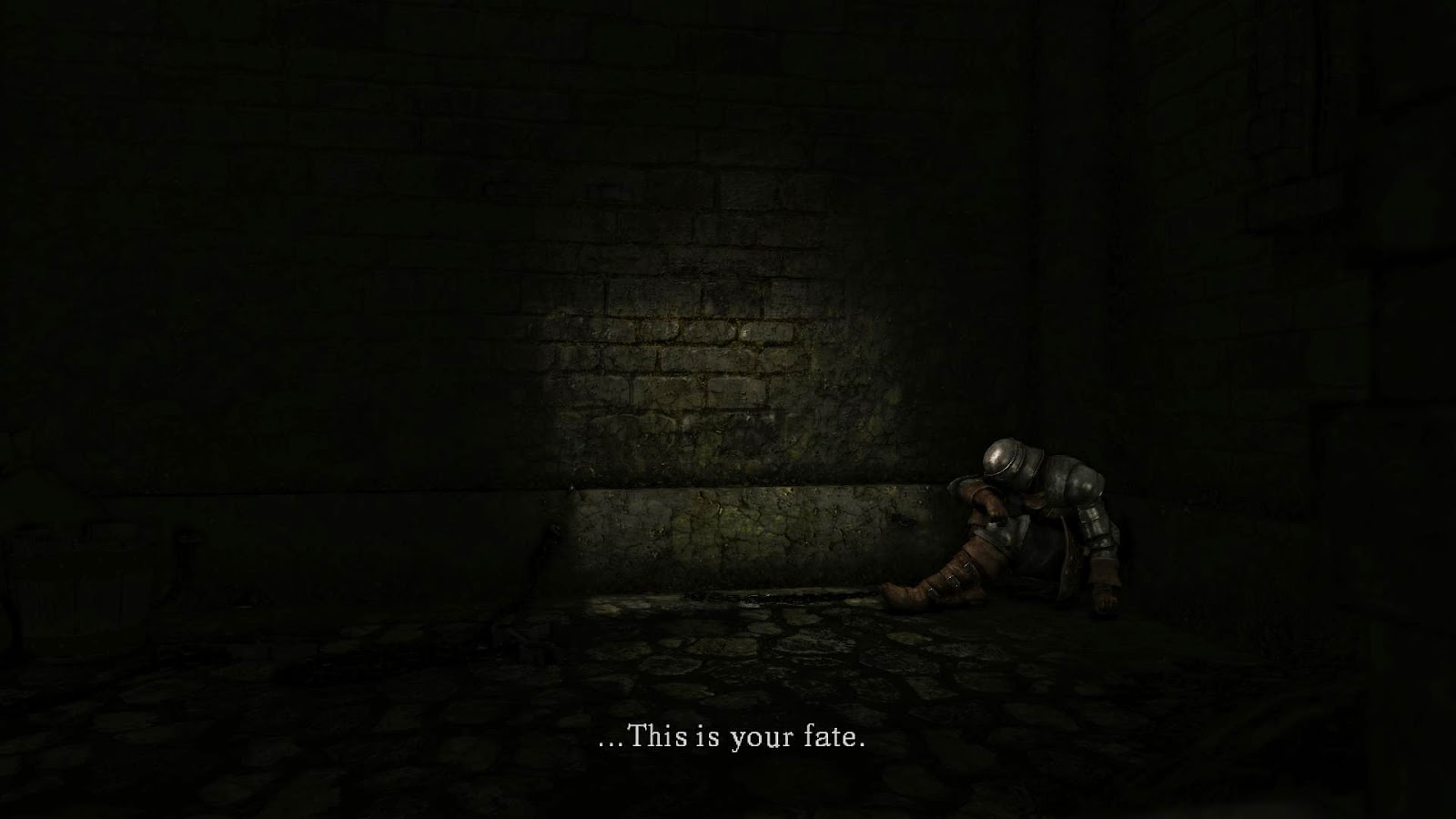
14 - Dark Souls: This is your fate
Fate relates to all that is already written, foreseen and foretold. It's about destiny and the inevitable. Fate is what controls you like a puppet. In sum, fate is much like the structure, the habitus, the limits of the system, the dispositif, or the constrictions imposed by other social agents. Don't worry, as oppressive and bleak as your situation might seem to be, there is always room for some good old free will: agencies, arrangements, shady deals, plays, tricks, detours. We also play a role in our fate and, more importantly, our actions are part of other people's fate.
  
15 - Spec Ops: The line:  Too many lies
When a specific number of lies becomes too many? Is not just one lie enough? Why are we worried about lies when there is a guy holding an assault rifle (or is it a shotgun?)? Amidst the lies and the guns we can spot the news. You can figure out the rest.


Previous entries:
0

Long live to the three-headed monkey!

The other day I was watching Tim Schafer in the special PBS Game/Show on humour in video games and something suddenly shocked me: the famous line that gives name to this blog  - Look behind you! A three-headed monkey! - could have not existed. Schafer was working in Monkey Island writing a dialogue in which Guybrush needed to distract the villagers and came up with that line, but he immediately thought it was stupid and was sure Ron Gilbert, the leader of the project, would get rid of it. 


One of the best lines in the history of video games and Schafer almost take it out! Fortunately, they kept the line, everyone is happy and this blog exists. Imaging life without the three-headed monkey is like gazing upon a bleeding wound in the space-time continuum. Long live to the three-headed monkey!

And monkeys are always funny, three-headed or otherwise. Period.
0

Diaries from The Forest (vol.1): senseless brutality

In my efforts to experiment with new research techniques in social sciences, I will create two new regular sections: diaries and flash sociological reviews. You can read about the latter here. But at this moment, I'd like to focus on diaries.

What is a diary? You'll probably have already seen those articles on magazines and posts on forums in which the author describes what they've done and experienced during a specific gameplay. It's not a review per se, it's more like a diary entry, where you express what happened in your life that day and how you feel about it. This could be a good example on RPS magazine about the game DayZ. It's probably too elaborated and it's not easy to find those on the Internet, but it's still a very good model to follow. After some time playing the game, I'll try to make a similar attempt.  

I don't intend to imitate those pieces to produce narratives and share experiences about video games (although, wanted or not, I will  inexorably participate in the process), but to take advantage of it in order to analyse and explore those shared and semi-ubiquitous-produced narratives and experiences. By copying social actors behaviour and their way to produce knowledge, I hope to find new ways to approach their reality. The diaries will be brief and will include my own game experiences along with extracts from other gamers  diaries. These diaries will be, at the same time, part of a sociological method and of video game culture. 

As it seems that survival games are prone to this kind of narrative, my first attempt to experiment with diaries will be The Forest. I've chosen The Forest for two reasons: firstly, because it's an open world survival game that has already produced 'diaries'; secondly, because it's on Steam's early access games program, which means The Forest is a game still in development and, therefore, it's the perfect candidate to see up close the process of producing a video game and how the developers and video gamers interact with each other. But that's another story, let's go with the first volume of this Diaries from The Forest that has been entitled Senseless brutality.

Senseless brutality
I was on a plane. Nobody was around me but a little kid who I assume is my son. Something was wrong with the plane, we crashed... I woke up on the floor of the crashed plane,  I looked above and saw someone who had taken the kid (again, my son? my nephew?) in his arms. He doesn't look like friendly (is this a racist or ethnocentric assumption?). They leaved.
I stood up. I was hungry, thirsty and in pain. I ate some meals from the plane's catering. I drank a can of soda. I took everything I saw compulsively, including an axe I found stuck into a stewardess. She was dead. I got out of the plane and started looking for clues on where I was. I felt disorientated and didn't know what to do. I noticed I had a survival guide in my backpack. I opened it and decided to build a shelter. A hunting shelter according to the guide. 
As soon as I was about to place the shelter just next to the wrecked plane, I found myself surrounded by hostile individuals. They seem to be part of the same tribe (ethnocentrism again?) of the man who took the kid. There were four or them, three males and a female. At least two of them were armed with blunt weapons. They're fast. Incredibly fast. They climbed the trees, jumping from one to another. They were really scaring me. They circled me, they wanted to attack me from my weakest point. I fighted back, but I didn't last too long. One of them, the most intimidating one, took me down. I fainted. 
I woke up in the dark. I used my lighter. I was in some sort of subterranean cave. Dead bodies, some of them horribly mutilated, hanged from the ceiling. I took everything I saw: food, medicine, drinks, a flare gun and some flares. I frantically looked for an exit.
I came across a corpse of a man with a rusty axe into his belly. I took it. I made a creepy joke about his t-shirt: 'I love my guts'. I laughed. 

After a fleeting moment of cheeriness, the looming dread of what might inhabit the cave made me shiver. Almost blinded, I made my way towards what I thought was the exit. I missed a step and fell. I was dead. 
Days survived 2. I still don't know where I was, why they took the child and attacked me. I don't understand why they did what they did to those poor people. Senseless brutality.

Compare my first play with another first time experience: 
-The first time I played-
Spawned near a beach.
Grabbed some supplies.
Wacked a bunny over the head with my axe.
Grabbed the bunny.
Built a fire near the coast.
Cooked the bunny.
Saw a mutant in the forest watching me.
It started screaming and 5 more walked out.
They started sprinting at me, so I swam out into the water.
They all stopped at my camp and stared at it. 
5 of them walked away and left one lone mutant.
I was all like "I got this ♥♥♥♥" [shit?] and ran towards the mutant with my axe.
She hit me twice and killed me. 
I woke up in a cave with a bunch of dead bodies hanging from the cave ceiling. 
Found an axe and a flare gun, then slowly made my way out of the cave.
3 naked mutants ran at me and killed me by beating me down with human heads.
11/10, thats some spooky ♥♥♥♥ [shit, again?]. 
Source: Steam users reviews on The Forest (posted: 31 May 2014; user: Rawlson).

To make my first diary reverberate through the same channels, I will post my experience on Steam reviews. I will keep track of the outcome. Expect more diaries soon. 
0

Videogames and Sociology: Twitter's pic of the day summary (6-10)

This is the second round of Pic of the day RECAP (6-10). To understand what all of this is about, check out the original entry. 

6 - The Secret World: The end of the world waits for no man

The end of the world is the passage of time and what it comes with it: decadence, death, oblivion. Furthermore, only the signs of ageing prove the existence of the passage of time. The statement is partially wrong nonetheless: it waits for no man, indeed, but also for no animal, object, building or custom. In any case, there are still the possibility of (more or less) good outcomes after the end of the world: you can be turned into a myth, a social institution or cultural heritage. 

7 - Amnesia: Oh my... so Babylon shall fall, you say

We could interpret Babylon as the reflection of world's evil. But the ancient city's metaphorical prowess shouldn't be circumscribed to evil. Babylon is everything - a marriage, a car, a government, a culture, a theory -  that was, is and will be. It's another word to describe gravity: they all rise and, sooner or later, shall fall.

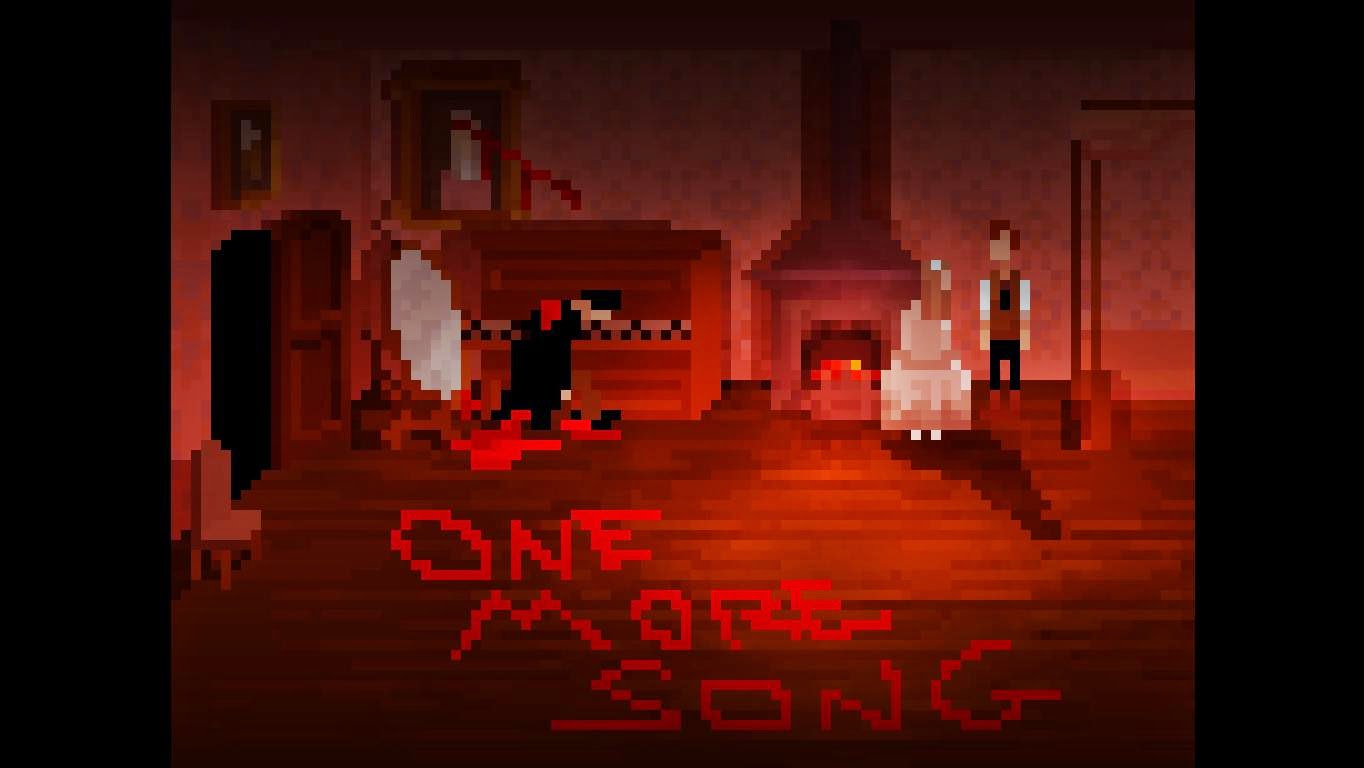
8 - The Last Door: One more song

One more song. One more episode. One more play. One more cup of tea. One more kiss. One more bit of chocolate. One more joke. One more apricot. One more cigarette. One more pint. One more one more... No matter what 'one more' you ask for. One more and it will finally kill you.

9 - Assassin's Creed: Nothing is true, everything is permitted

The assassin's rule of conduct is formed by two different, not necessarily related, statements. The first one, nothing is true. I would be tempted to say the sentence is true, but then it wouldn't be true what I was saying. Let's try a Foucaldian approach: we are faced with games of truth. Regimes of what can be said and what can be seen within specific conditions of possibility. In fact, the second statement, everything is permitted, is a gentle reminder of the contingent nature of those regimes of truth: it's what incites us to push the limits of thought and overcome the current conditions of possibility (creating new ones). 


10 - Call of Cthulhu: Dark Corners of the Earth: Innsmouth? Never heard of it

The dark, forgotten and damp - because everything in Lovecraft's universe is clammy - village of Innsmouth represents the uncharted territory of the unknown. From time to time we receive clues of those unheard realities in the shape of phone calls, hunches, whispers, premonitory dreams or letters to the editor. Seldom do we notice those signs, but eventually someone will do and Innsmouth will have to change its location.

Previous entries:
Videogames and Sociology: Twitter's pic of the day summary (1-5)