0

EGX, Birmingham 2015: Chronicles of a Doped Video Game Culture

The path from Birmingham International train station to the NEC's halls where the 2015 edition of EGX was held, considered the biggest video game event in the UK, seemed never ending to me. I hadn't entered the halls of the event and I was already tired. This is the chronicle of my experience at EGX. As a disclaimer I have to say this is my first time at these kinds of events and I will speak from the perplex point of view of the curious sociologist. And I know, the pictures are terrible. Blame the photographer (me), the camera (mine), and the dimmed lights (that's on EGX). 

The dope
Don't get me wrong, there was nothing illegal happening at EGX. I am making reference to the stand giving away one of those energetic drinks that are suppose to fuel gamers' drive. I smiled back to the girl who offered me one of the cans; I claimed and took my dosage. It's one of the first things you come across once you step in the hall. Impossible to miss. And it's free! But that was not the only dope in the event. The people, the noise, the flashing images, the lights, the dark zones. Everything was set to drag you into a hyped state of feverish video game overdose. And it worked.


Wandering a non-place
People who attend video game events are not gamers, they're wanderers. The layout is designed to make the attendants jump from one environment-booth to another. These events force us to traverse an endless circuit of wandering, watching, queueing, playing, and repeat. Occasionally you sit somewhere, eat something, tweet, or go to the toilet. But all those things happen on the air; there is no interruption, no schedule (or it is, but the activities are standard copies or the former, even if they're different presentations or talks), no sign (internal or external) that warns you stop or take a break. Everything works in an organic systemic way, flowing like a continuous current. Like those casinos in Las Vegas, there are no changes in the general tone, the light, the music, the sounds. Video game events are an ephemeral version of one of those non-places described by Marc Augé (2009).

Indies vs. The Corporation
In general both indies and big companies work under the cultural logic of late capitalism (Jameson, 1991), but the typical Microsofts, Sonys, Ubisofts and Nintendos like to show muscle by building their own differentiated environments. They are managed as if they were night clubs: wait your turn queueing and, maybe, the guy in the entrance, the one with the list, will let you try their new piece of work for five minutes. Some are nicer than others, but the independent developers are clearly more accessible. And you can actually talk to them while you're playing their games.
Shrillness
One of the things I did was to play video games on platforms I usually don't play, i.e., PS4. If these events are exceptional, as those moments of collective effervescence described by Durkheim (1915), I was determined to do something exceptional. So I came across Everybody's gone to the rapture (The Chinese Room, 2015) and decided to give it a try. That's when I realised these events are  really infested and contaminated by sounds, lights and all kinds of stimuli. Everybody's gone to the rapture is suppose to be an immersive and introspective personal experience. If you have some lads next to you with microphones shouting at the top of their lungs in some sort of activity with loud music, video and dancing... that's not what you experience. It's not only their fault, everything is massive and excessive in all its glory. It's part of the attractiveness of the event, but creates disruptive experiences with the medium.

Over-excitement
Remember the dope I wrote about above? At some point, I don't know why, I decided to drink from the can I took. The can was full of warnings: 'tornado', 'storm', 'energy'. Also, the ingredients did not give much space for speculations: guarana, caffeine, taurine. I drank half of the can, anyway. It helped me to vibrate at the same frequency of the event: I wanted to try everything but at the same time I was put off by the flow that drags you around the circuit ceaselessly. Everything becomes a distorted, abnormal experience of what is gaming. Substitute 'religion' for 'gaming' and it's as if Durkheim was describing video game events a century ago:
However, it may be objected that even according to this hypothesis, religion remains the object of a certain delirium. What other name can we give to that state when, after a collective effervescence, men believe themselves transported into an entirely different world from the one they have before their eyes? (1915: 226)

Don't look at me now
Playing video games while surrounded by strangers who are watching your gameplay made me uneasy. It's not nice to feel all those eyes on you when you know your are not a particularly skilled player. This was excruciatingly painful when I tried games I never played before (MGSV, Assasin's Creed: Syndicate) on platforms (PS4) alien to me. It seems that all those days in the arcades are long past now. Were they judging me or it was everything in my head? I blame the dope for this paranoia.

Conclusions
All in all, visiting a video game event for the first time was funny but tiring; interesting but repetitive. These events encourage exploration of video game culture but in a strident way, which, in the end, is fabulous for sociologists, anthropologists and other knowledge scavenging creatures like me. 

Bibliography

  • Augé, Marc (2009). Non-places: Introduction to an Anthropology of Supermodernity. London: Verso Books.
  • Durkheim, Emile (1915). The Elementary Forms of the Religious Life. London: George Allen & Unwin.
  • Jameson, Frederic (1991). Postmodernism, or the Cultural Logic of Late Capitalism. Durham: Duke University Press.
3

Not holding the player's hand: The Vanishing of Ethan Carter


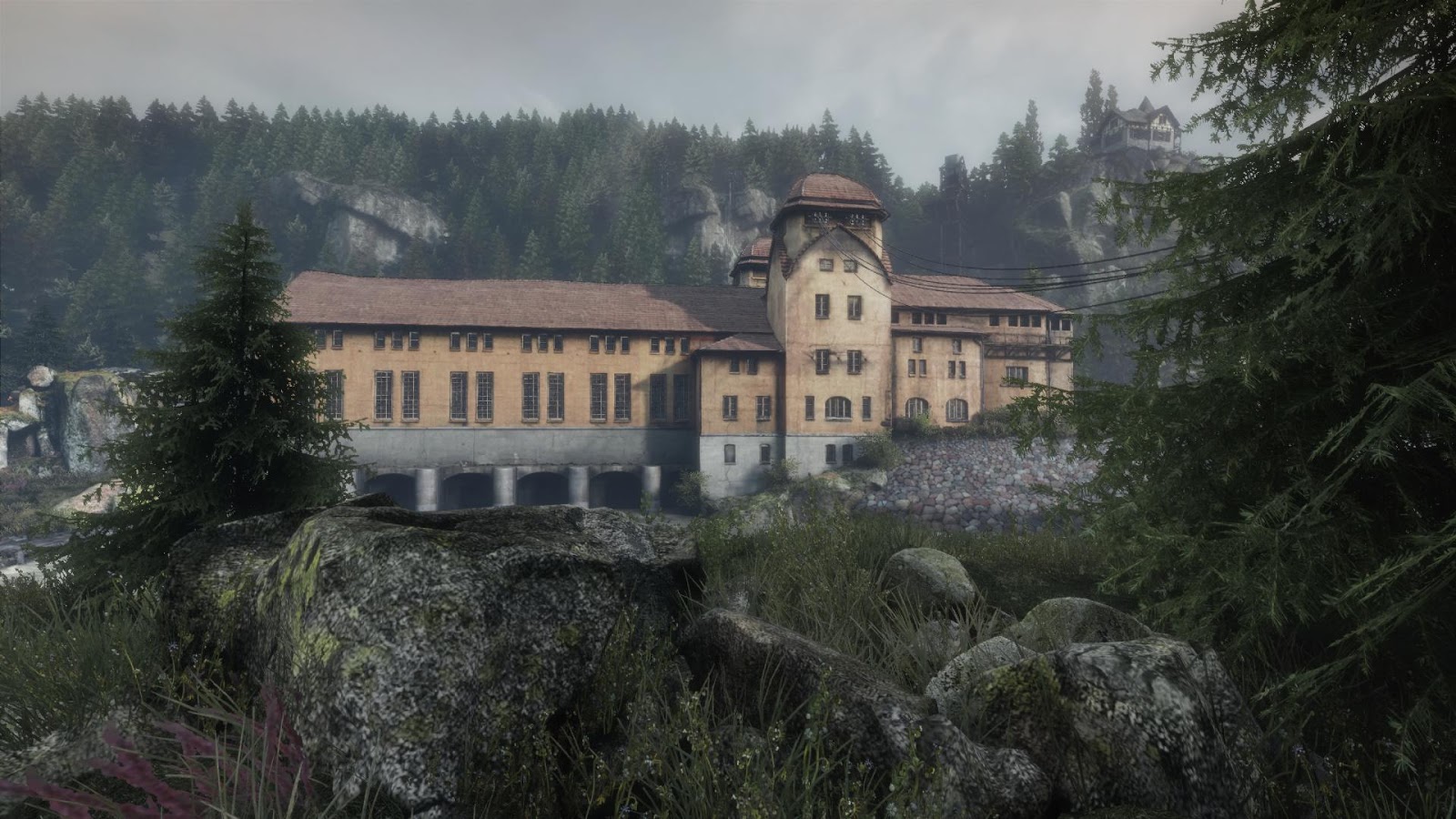
The Vanishing of Ethan Carter (The Astronauts, 2014) begins with a bold statement: 'This game is a narrative experience that does not hold your hand'. Why have its developers decided to include this sentence at the beginning of the game? It seems obvious they want to distinguish their work from those of others by means of implying that most video games hold players' hands. In other words, video games would tend to spoon-feed players, treating them as if they were just more or less passive recipients and relatively incompetent individuals who should be guided accordingly. That's maybe why there are so many in-game tutorials, reminders of what is your next objective, and autosave points just in case something happens; or why there are so many built-in ersatz google maps  in any video game, even though the GPS technology constitutes an anachronism or a mere functional dissonance in the game's universe. But were not interactivity and the player's agency what make video games different? Something is rotten in Rapture.

In order to shed light on this issue, I think it is of the most interest to delve deeper into some of the thoughts expressed by Adrian Chmielarz, creative director of The Vanishing of Ethan Carter, about his vision on designing and developing video games at The Astronauts blog. In a text entitled The truth about challenge in games, Chmielarz poses the following question: 'What’s the difference between game challenge and a real challenge?' The answer is clear and simple: 
When you challenge yourself to climb a mountain, the mountain does not give a rat’s ass about you. When you challenge yourself to finish a game, the game does everything it can to help you.
After mentioning a long list of elements that are there to ease the gamer's transit towards the end of the game, which includes, among others, self-regenerating health, in-game hints, grenade indicators, and adaptable AI, he concludes: 'it’s not the challenge, but it’s the lack of it that is the reason why people love video games'. Video games desperately encourage players to overcome every obstacle in order to reach the end. In the end, it's an exercise of over-empowering video gamers that, paradoxically, tames them and makes them malleable. Video games become overprotective and, in doing so, divest the player of their initiative, of their ability to face challenging situations, solve problems, overcome barriers, or avoid difficulties. After all, video games guide us constantly, as if every day they were whispering how much they care about us in our ears: There's no problem, you can reload your last checkpoint. Or wait a minute; your health bar will regenerate in a moment. Watch out, they're shooting you from above! Hey, turn to the right now and then you go straight on; you only need to follow the highlighted lines on the ground. Look, there is your aim, you know what you have to do; if not, don't worry, I'll remind you. That's how it is; in general, video games don't seek to frustrate you as a gamer and stop playing them. The subject subjected.


We face thus a paternalist approach that emerges from the video game and its design. It infantilises the player to a great extent by offering them the illusion - joyful and fun, I won't deny it - of the powerful agency, the one able to make a difference in the world that surrounds them. However, the path of power, agency and freedom is full of pitfalls, as Foucault knew well (2003). How to break with this tendency or, at least, offer an alternative to it? How to let the player loose by giving them only the minimum amount of instructions, and let them cope with the universe on their own? In this sense, Chmielarz gives a plausible answer - one that he tries to apply in his works - in another blog entry. Emulating reality, obstinate like those  Kafkaesque nightmare worlds - because of their ordinariness, and elusive like Haraway's Coyote - that 'protean trickster' (2004: 68), why not create game worlds that don't care about the player at all? 

It's about building game worlds that be indifferent to the player; worlds with their own agency and agenda. The aim is to create universes as if they had already been there before the player arrived. That's why they shouldn't submit to the player just because he or she has showed up. According to Chmielarz, the player must be considered an intruder. And if the intruder wants to survive and progress in that world, know what has happened and what could occur in the future, they will be the ones who must adapt to the environment and not the opposite.
First, a lot of our environments are taken from the real life and put into to the game without the world bending to the player. (...) It’s just you and the Red Creek Valley. And the valley is indifferent, disinterested, real.
I agree with Chmielarz that the universe of The Vanishing of Ethan Carter, Red Creek Valley, sits there, silent, hardly giving you instructions. You are the one who moves around its landscape; laconically beautiful, photorealistic, crowded with things that once were and don't exist anymore. It is your responsibility as a player to unveil what happened, but there would be no one to tell you if the story (or stories) you concocted are correct. When you finish the game, which you will know because the end credits will start rolling on your screen, Red Creek Valley will have shown and said everything it had to say to you or what you have been able to learn from it. But there won't be anything else; you will be the one who must take full responsibility for the interpretations you make. How are all the stories we found intertwined? What is fiction and what is real? How were the relationships between Ethan's relatives? Stories inside stories? Stories of stories, maybe? What role does Prospero play in all those events? What happened in the end? Life, death?


The Vanishing of Ethan Carter is not the only title that tries not to hold players' hands. There are other narrative-driven experiences that leave players on their own when it comes to putting all pieces together, such as Gone Home (Fullbright, 2013), Her Story (Sam Barlow, 2015) or Home (Benjamin Rivers, 2012). Beyond these narrative experiences, there are other video games that follow this idea of creating game worlds indifferent to players like the Dark Souls saga (From Software), Minecraft (Mojang, 2009) or Proteus (Ed Key and David Kanaga, 2013). The player must be a proactive agent in all of those games; players cannot rely on the game world to ask for help. They can turn to the community, though.

These kinds of game universes and the type of active player they help to form encourage what Henry Jenkins coined as participatory culture. It is a culture that 'absorbs and responds to the explosion of new media technologies that make it possible for average consumers to archive, annotate, appropriate, and recirculate media content in powerful new ways' (Jenkins et al., 2005: 8). Jenkins suggests there has been a major transformation between a previous culture dominated by a passive audience of consumers and a current culture where is becoming hegemonic a more pro-active attitude towards consumptions, blurring the boundaries between production and consumption (Jenkins, 2006: 60). Thus, it is possible to draw a line that connects active subjects to participatory communities.

Having said this, almost every video game can be analysed through the lens of this type of culture. Whether the game holds your hand or not, it's normal to find communities around them, which interact at different levels: discussions on their plot, strategies to progress or defeat specific enemies, wikis, mods, fan fiction and so forth. What those games intentionally achieve is to go one step further: they introduce the necessity of getting actively involved in the very experience of play. In a way, these video games are rewriting the relationship between developers, video games, and gamers. All of them are active agents that influence each other. Even if the hierarchies between those agents don't disappear completely, they are blurred and the interactions become more complex, dynamic and, potentially, enriching.  In this regard, The Vanishing of Ethan Carter couldn't be anything less and there are already multiple interpretations of what happened.


At the beginning of this text I said that something was rotten in Rapture. If you have played Bioshock (Irrational Games, 2007), I'm sure you remember your encounter with Andrew Ryan and the (in)famous 'Would you kindly' plot twist. Bioshock is an outstanding work that teaches us a lesson about power, freedom and agency. It should be studied in Philosophy, Anthropology, Sociology and Political Science courses among others. The irony is Bioshock gives us the lesson from within a video game.  Maybe it's the best medium to approach those topics. In fact, we have witnessed the appearance of meta video games for some time now, such as Portal (Valve, 2007), The Stanley Parable (Galactic Café, 2013), The Magic Circle (Question, 2015) or There Is No Game (KaMiZoTo, 2015). These games explicitly address the relationship that is established between developers, video games and video gamers, dealing with the notion of agency and the ability of players to make decisions.

The fact that a video game announces it won't hold your hand at its very beginning might be considered paradoxical. Is not a statement that contradicts itself in the same moment it's been enunciated? If you tell me that you are not going to hold my hand, are not you holding my hand in a certain way? It's like that imperative to practice one's freedom: 'Be free!' Should I obey and then I will stop being free? Should I exercise my freedom to not obey but then I will stop being free again? Could this be a more sophisticated form of controlling our actions after all, like in neoliberal political rationalities (Rose, 1999)? 'Govern yourself!' 'Use your freedom to be regulated!' Nevertheless, as Deleuze (1990) wisely pointed out, among the lines that articulate the dispositifs that dominate us, there are also the lines that help to break them. Not everything is lost. 'A man chooses, a slave obeys,' Andrew Ryan proclaimed. When we play, do we choose or obey? It is a difficult question to answer, but the fact that there are games like The Vanishing of Ethan Carter that try not to hold (too much) our hand while we play is a promising start.


References
  • Deleuze, Gilles (1990). “What is a dispositif?”, in Armstrong, Timothy J. (editor). Michel Foucault Philospher. New York: Routledge, 159-168.
  • Haraway, Donna (2004). “The Promises of Monsters: A regenerative Politics for Inappropriate/d Others”, en Haraway, Donna, The Haraway Reader. Nueva York: Routledge, 63-124.
  • Jenkins, Henry (2006). Fans, Bloggers, and Gamers. Exploring Participatory Culture. New York: New York University Press.
  • Jenkins, Henry; Purushotma, Ravi; Clinton, Katherine; Weigel, Margaret; Robison, Alice J. (2005). Confronting the Challenges of Participatory Culture: Media Education for the 21st Century. Chicago: MacArthur Foundation.
  • Rose, Nikolas (1999). Powers of Freedom: Reframing Political Thought. Cambridge: Cambridge University Press.


0

Videogames and Sociology: Twitter's pic of the day summary (46-50)

This is the tenth round of Pic of the day RECAP (46-50). To understand what all of this is about, check out the original entry.

46 - Max Payne:  The American dream

Proud and confident. Almost invincible. That's how Max Payne felt before everything went south for him. Because it seems that when things take a turn for the worse they just go south, where all that is bad happens. "Is the American dream dead?" asked Crish Cillizza in a article published on the Washington Post. There's every likelihood that it is indeed dead. Over, like in the Rob Orbison's song. Kaput, like The Weimar Republic in 1933. In the end, all that middle class canned happiness was mostly bullshit. Advanced liberalism and post-Fordist capitalism are like those free-to-play games; you only win if you pay enough. And by enough I mean a lot.

47 - Amnesia: A Machine for Pigs  This world is a machine! A machine for pigs!


This world is a machine! Is that good or bad? Wait a moment, there is more. A machine for pigs! Well, that is more accurate. The world is a big, monstrous, relentless, and ruthless machinery inclined to crush any being that happens to inhabit its entrails. Don't be fooled. A machine for pigs is a more poetical way to refer to a slaughterhouse. And if it wasn't enough wrecking our bodies mercilessly, the machine also wants to break our souls, minds, wishes, ideas, hopes and anything that resembles humanity - that suspicious notion. Just watch all those greedy fascists governing and operating the machine. They're also pigs that will be equally devoured by the machine eventually; they have just decided to buy a little more time sacrificing everyone else in the process. 

48 - Octodad:  BLRBRLBLBRLBLRBLOOOOOOOO


BLRBR LBLBRLBL RBLOOO OOOOOBLR BRLBLB RLBL RBL OOOOOOO OWeberBL RBRLB LBR LBLRBL OOOO OOOOLatourBL RBR LBL BRLB LRBLO OOOOO OOSocialisationBLRB RLBL BR LBLRBL OOOO OOO ODurkheimBL RBRLB LBRL BLRBLOOO OO OO OETABLRBRL BLBR LBL RBLO OOO OOO OAgencyBLR BRLBL BRLB LRB LOO OOO OOOBourdieuBLR BRLBL BRLBL RBLOO OOOO OO BL RBRLBLB RLBL RBLO OOO OO OOMediationsBL RBRLBL BRLBLR BLOOO OOO OO BLRB RLBLBR LBLRB LOOO OOO OOB LRBR LBL BRLBLR BLOOOO OOOORajoyBL RBR LB LBR LBLRB LOOO OOO OOB LRBR LBLB RLBLRBLO OOO OOO OStructuractionBLRBR LBLB RLB LRBL OOOOOO OOBLR BRLBL BRLB LRBLOO OOOO OOEpistemology BLR BRLBL BRLBL RBLOO OOOO OOGiddensB LRBR LBLB RLBLR BLO OO OOO O

49 - Metro 2033: Light! Someone must be there


Have your ever heard that epistemological crap about the smoke and the fire? You know, if there is smoke, that will be the sign of the existence of a fire and so on and so forth. Well, we tend, not always fortunately, to interpret reality in those terms. Look! Light! Someone must be there. Look! Water! There must be a leak. Look! Lipsticks traces! A woman must have been drinking from this glass. Listen! A dog is barking! Someone must be trespassing. We should deal with those signs as the character in the screenshot: with suspicion and, preferably, drawing a firearm.

50 - The Binding of Isaac:  Faith Up!


I often think that video games just copy their mechanics from reality. After all, is not what really happens in real life? Whenever we finish counting the beads of our rosary, faith up! Wherever we visit a church, faith up! Whoever prays to a god, faith up! Whichever sermon you hear, faith up! That also works in the opposite direction, all those things that make our faith go down. All in all, we all have a lifebar or a certain amount of health points, we collect coins and have keys. Some even have guns and bombs. And we try to level up as much as we can in order to overcome any barrier we might find in our paths and to defeat the new boss (sometimes literally) that impedes our progression in life. Doubtlessly, we need as much faith as we can get.

Previous entries:
1

Interviews - Karla Zimonja on Gone Home

After doing a few interviews for my research, I soon realised that people - no matter if they were designers, gamers or any other pertinent actor in the field of video games - tended to mention particular aspects of video games (their mechanics, their narratives, specific moments that were relevant to them somehow) in order to illustrate their points or explain to me what they wanted to convey. Most of the time they found very difficult to express what they were thinking and feeling in an abstract way, so they used particular references attached to gaming experiences to make their thoughts and emotions emerge. I thought then that it could be a good idea to try a new methodological approach: focus my attention on a particular video game, play it, see what was said about it on the Internet (gamers and critics) and, after analysing all that information, contact their developers and ask them about some of the main topics I found during the process. What you'll see in this new section is that conversation.


Today, the fabulous Karla Zimonja, co-founder of Fullbright, on Gone Home.


Daniel Muriel: In order to contextualise the interview, could you tell me something about yourself, about your academic and professional background? How and why did you end working in the video game industry?

Karla Zimonja: Sure, so let’s see. I went to school for animation. I have a degree in animation. I did some TV shows for a couple of years before a friend of mine, who was working at a game company in Massachusetts, was like: “We need an animator, do you know how to animate in 3D?” And I was like: “I know how to do stop motion!”, which is not the same – I tried it for a long time and try to make it the same but it’s not -, and I did some tests and it wasn’t that hard, and so they hired me (this was a long time ago). I was lucky enough that the studio was switching software. They were switching from Lightwave to Maya, so I got to learn along with everyone else, which was super convenient! Then I worked as an animator for a bunch of years and eventually I kind of burned out on it and started working at 2K Marin as a researcher and sound-tech-person-ish part-time, and I just started doing more and more things and then I got to be full-time and got to do a lot of different jobs. 

DM: Let’s talk about Gone Home then, right? Why did you decide to do a game like Gone Home? What did you expect to achieve with it?

K: Initially, I think, we just wanted to see if it would work! We wanted to see if we could make a game that was exploratory and interesting in first person without having any combat or puzzles, for that matter. We wanted to see how that would work as a game, and we thought we would like to play something like that, so we sort of hoped that other people would.

DM: Gone Home was released on, if I’m not mistaken, the 15th of August 2013… 

K: Yes!

DM: According to what you expected, how everything went, in your opinion? I’m speaking about its reception by both critics and gamers

K: More people cared about it than we assumed it would. We did not necessarily think it would be, you know, super noticeable. But I guess it did end up being that! We got a lot of really good responses and a lot of amazing emails by people who were really touched by it and stuff, and that was extremely good. 

DM: Are you satisfied then with the …?

K: Oh yeah, it’s hard to not feel something when someone writes to you and tells you that your video game gave them the courage to likes come out to their parents! 

DM: Did you receive a lot of emails or messages saying: “Well, this video game really touched me, or really was important for me”?

K: Yes, we got a surprising amount of emails that are just the sweetest. Yeah, totally! I think part of it is that if you care about something you will have the motivation to write about it, but if you’re really angry about something, you have to dig around and find someone's email, and it's effort, so we got very few horrible people emails and almost always very sweet emails from people who our game meant something to, which is great! I did have to block a lot of people on Twitter, but…

DM: I think that is unavoidable. According to those things you are telling me right now, what impact do you think Gone Home had on the people who played it? What would you say the main emotion people conveyed to you is?

K: There is a lot, because it’s one of those games that you have to kind of engage with it yourself, and on whatever level you happen to engage with it, that will determine your experience of it. There’s a certain range of responses that we definitely … let’s see, we got a surprising number, whenever we heard from guys, they’d be like: “I identify with dad”; we heard from women or young women or actually young men too sometimes - older men, they like dad - but younger men and queer people were often like: “We’re validated by this”, which is really nice. The responses we get are usually very supportive and personal. Not like comments on Steam [laughter]. We actually heard from some parents who played with their pre-teen, or whatever, teenage children, and it’s really cute, it’s really sweet! I think we got one email from a hardcore Christian who was like: “I can't allow my child to look at this.” But yeah, they have to be used to there being gay people in the world, so, sorry, guys! [laughter]

DM: Maybe Gone Home has helped some people to realise that as well.

K: Yeah, I hope so! That’s the thing about video games, they can give you experiences that you can’t have in real life, that you haven’t had, so it can be, hopefully, an experience that can add to someone’s conception of how people are in the world.

DM: When you were working on Gone Home, did you explicitly think about the people who were going to play the video game?

K: We did, because at the very least, we wanted to make it very accessible, so we didn’t want to make it hard for people who were new to first person video games. We did not want them to have a horrible time. We wanted to be able to get someone who says: “I don’t know how to play video games” and go: “Try it!” I think a thing that can be said is that it allows you to learn without pressure. Because there's no timing,  puzzles, there is nobody that is going to shoot you if you don’t do something right, etc. etc. So, we got a couple of emails from people that said like, “Now I know how to play first person video games, so I can go play Portal”, or what have you, and that’s cool! [laughter] So, accessibility is a thing. I think that’s actually one of the biggest things. We just wanted a wide range of people be able to play it. 

DM: Do you think it’s possible to design a video game without taking into account the people who are going to play it? 

K: Uhmm. I’m not sure. If you try to do that you probably just end up designing it to your own specifications. You would just make what’s comfortable for you... I don’t think you can completely abdicate. Something will be there.

DM: You received a lot of emails telling you about what people thought about your game, what impact it had on their lives. Now, in your opinion, what kind of impact would you like to have on them?

K: I feel like my favorite thing that I would like to see more of is older people playing it and realising how things can be different. It would be cool if people who needed it or who would be helped if they played it, although that’s not very specific.


DM: It’s about what you’d like to do with your video games, so I think that’s also something that’s very interesting: just someone who needs it. It’s a good answer!

K: There’s a lady player character, a lady protagonist, so even that might mean something. It seems like games should be at that point, but I don’t think we really are. So it’s nice to provide that to people and I hope that people are pleased.

Is Gone Home a video game?

DM: The status of Gone Home as a video game has been under scrutiny from the beginning, from both critics and gamers. Quoting Brian Crecente from Polygon: “Is Gone Home a video game? Gone Home is a game of exploration and narration, an effective vehicle for storytelling. But its lack of puzzles and combat, and the inability to lose or even change the outcome, have some questioning its gaming legitimacy.” I also found that others recognise that this is a game, but they would have liked to see more of game mechanics. There are also some gamers who say that it’s just an interactive fiction, or a walking simulator, a label which has been used with other games, or that the story of Gone Home could have been delivered as a book or as a film. What do you think about this? Is Gone Home a video game?

K: I don’t see why not. I think it’s a video game. I have no idea why it wouldn’t be. The thing that people don’t necessarily understand, I’m not even sure whether we understand it for ourselves, is that a lot of Gone Home's difficulty, the challenge, takes place in your head. It’s not an external challenge, it’s an internal challenge. You have to figure things out, you have to put pieces together, you have to use your intelligence, and your social intelligence. There’s obviously no way a video game can give you achievements for that, because that’s not possible. I think that it's moving where the challenge is, from dexterity-based skills or quickness to mental challenges. I think that is interesting and I feel like it’s perfectly challenging. It can be a big challenge to figure out what’s going on from disparate pieces of information. 

DM: It is very interesting because, right know, I have this written down, it was someone defending Gone Home as a video game, and this person said: “The game happens inside your head, as you start to piece together the scraps of information you’re getting”.

K: They’re exactly correct.

DM: That is actually what you were saying right now. 

K: They’re exactly right. I mean, it’s unusual, right? Except, that’s the thing with a lot of interactive fiction and Twine games and such, it's actually not dissimilar. So, I’m not insulted by people calling it interactive fiction at all! Because you are parsing the social and normal events, you’re thinking about them, you have to do work in order to engage with these works. Your work can be skill based, but it’s not manual skill based. It’s interesting. 
The other thing is, of course, that you drive your own experience of it. You just follow your own nose, your own interest. You get to follow where you’re interested in, so you can direct your own investigation, basically. You don’t have to find everything in order to understand most of the story. You can investigate to the depths you want to bother with, and stuff like that. It allows you to set your level of engagement, which is hard to do with a book. It’s about choosing your own path.

DM: There are a lot of people who firmly believe that this is a video game, of course. But they say that this is not a ‘classic’ video game. It’s something new. Was this something that you were looking for? Something that is not usual in the video game industry?

K: Oh, definitely! For one thing, we all worked on Bioshock games and we thought, can we do something like that where the world is interesting and want to find out about it, but also there’re no jerks trying to shoot you when you’re doing it? So you get to actually explore, like you want to, as opposed to exploring when you can, and shooting the rest of the time. That was kind of the seed of it, I think.

DM: There was a comment about the game, this person said that it’s a game that might appeal to people who don’t usually play video games. This grabbed my attention, because not only is Gone Home seen as a game, but it could be seen or understood as a device to turn people who don’t play video games into people who play video games. 

K: Yeah! I mean, yeah, it can, which I’m really pleased about. We are lucky to have been able to do that, because it is really nice to sort of open that door for people, letting them understand that they don’t have to be intimidated so much. You know, a first-person novice game player watches somebody playing something really fast paced and intense, and I think it's a lot easier for them to just say “Oh, I don’t know! You play it, I won't try.” If you let them learn the basic principles of moving and looking first, it can be a lot better experience, probably. Like I was saying earlier with the lady who said: “yeah, I played your game and now can I play Portal”, and I was like: “That’s really cool!”, because Portal was kind of amazing. Can you imagine, that your first real Triple A video game was Portal? [laughter] That is pretty cool! I love the fact that we can make our games accessible to people. It seems horrible to make games that exclude people. Obviously, there’s always more you can do, you can always do more for people who are disabled in various ways, you know, hearing impaired, sight impaired,  and there’s always more to be done.


DM: I know this could be a tricky question, but how would you define video games? Could you give me the definition of video games? 

K: Argg, uhmm, alright, let’s see. 

DM: I’m sorry but I have to ask this!

K: Let’s see. I sort of feel like anything that is interactive and has feedback that… ugh, that… ugh, this is so wrong! I hate this, I can’t define anything! I went to art school, people ask me: “What is art?” and I’m like: Nope! I don’t know how to do it.

DM: Every time I ask this question, people struggle to give me a definition of games. 

K: Someone can always be like: “Well, if you define it that way, then how is Photoshop not a video game?” I feel like in a lot of ways it’s kind of an ‘intent’ thing, much like defining art, like, did you intend this to be a work? And if so, it’s probably what it is! But, I’m not really picky about the definition of video games, shall we say? I think it could be very broad. 

DM: That’s the good thing of being a sociologist, because I don’t need to define the object, because I have to let the people do the defining, the social definition of video games. I don’t have to do these kinds of thing, so. [laughter] 

Trusting the player

DM: There was this interview with your colleague Steve Gaynor. He said that there was a deep trust in the player to explore and not to be told what to do in the game. Also, in another interview he said, and I quote: “You have to always try to think of what I would want if I were the player, I personally want a game that allows me to inhabit it without getting it all up in my face. Being hands off with a player and trust in them to discover what’s interesting about the game world on their own yields the best result in my opinion.” What does ‘trust the player’ mean to you?

K: We obviously agree pretty closely on that. To me personally, we need to allow the player to pull themselves forward, because if they’re not interested enough to do that, we screwed it up. [laughter] Your motivation is the strongest motivation. I could be like: “Hey, there is this cool coin over here, you can come collect it”, or I can just make this area look interesting and you want to come look at it. When you choose to do it yourself instead of being tricked into it, it’s a much better feeling and experience for the player, period. 

DM: Is the player explicitly identified as a fundamental agent responsible for making the narrative possible? Would you say that this story of Gone Home is enacted through the player?

K: Sort of? I think it’s reconstructed in a lot of ways. It’s less performed or enacted, and more reconstructed.

DM: So, you would say this is reconstructed.

K: In a way, yes, it’s reconstructed and understood, I guess. In some ways it’s kind of brought to life, but it’s brought to life by the player’s head, so, it’s a little bit squishy [laughter]. 

DM: What do you think about the criticism of some aspects of the game that seem not to trust the player that much. I’m going to tell you some examples. Someone mentioned locked doors… So I know there’s an option to play without any locked doors but well… They said the voice-over, the notes, the setting and the stormy night. For some there were these misleading horror elements. They have been depicted as being contrivances and ways to deceive the player. What do you think about this?

K: Well, it’s a lot of things. Mostly those things were necessary in some way or another, because we’re not perfect creators. The locked doors are there so that we can be sure that you got a chance to understand things more or less in order, in chunks. So that we can be reasonably sure people get this part of the narrative, and so after that they could go do another chunk, go nuts. Because it’s a difficult thing to ask of people: “Yeah, here's all these random ideas, figure it out!”. That’s a bit much. Atmospherically, I think we wanted to make it seem like a real life creepy house. Being alone in an empty house is kind of creepy all by itself, right? Some people who played a lot of horror video games are instantly like: “Alright, monsters, horrible things!”, and it’s kind of hard to walk that line, because the more experienced players have a different expectation than the less experienced players. I think we chose to favor the less experienced players in this case, because, I don’t know, they need more attention. We need to think about them more. 


DM: What is interesting for maybe more seasoned players is that, for instance, they expect something to happen and then there are no monsters there, but somehow I think that’s cool as well.

K: We repeatedly put details in to say: “Alright, you think this is scary? It’s not actually scary!” We did that a few times. But I think some people were freaked out anyway. 

Empathy

DM: One of the words that is usually associated with the game, by both critics and gamers, is ‘empathy’. There are a lot of people who recognise themselves in the characters, the stories, even if they don’t share many characteristics with them. There were people that were emotionally hooked by the game, people caring about the characters’ fate. How do you feel about this idea of empathy? 

K: It’s cool. It’s a good thing.

DM: Did you seek to have this particular effect on people?

K: Yes, totally, that is intended. It’s connected to the whole ‘video games allow you to have experiences that you couldn’t have otherwise’ thing. It’s like a grad school-age white dude gets to see what it’s like to think about the world of a teen girl in the nineties. That is … good? [laughter] Giving people other perspectives is good, I think that it is valuable by itself. Empathy, I think, will come if you try to make the characters relatable. 

DM: It’s very interesting the fact that a video game can help some people be in the shoes of other people. That is something that I think Gone Home really has achieved.

K: Thank you, that’s really nice!

DM: Really, because I’ve found a lot of comments. Even men, straight men. The game helped them to understand those situations.

K: I think we’re really good at empathy, as humans. It’s nice to be able to exercise that sometimes in video games. 

DM: Also, Steve mentioned that you achieved this notion of empathy by not telling too much about Katie, the character. To diminish the dissonance between the player and the player’s character. Do you think there are some limits when it comes to producing this empathy, diminishing this distance, because there is always going to be some distance between the person who’s playing and the character on the screen. 

K: Yeah, fair enough. So I think, in a lot of ways we were not necessarily going for empathy with Katie. It was more empathy with Sam, and we were trying to get you in the shoes of Katie, so you could have, basically, permission to have this knowledge and such. You have that basis, theoretically, for not feeling embarrassed for snooping [laughter]. I think Katie supposed to be there for the player to be able to inhabit as seamlessly as possible, but obviously she is not a totally unnamed protagonist, and she does have experiences in her past that the player doesn’t have and stuff like that. We tried to make it not get in the way.

DM: There is a moment in the game that you are reading some of Sam’s notes, and Katie says: “Stop, I don’t want to read this note.” I think it’s the first sexual encounter of Sam. This is the moment where you see, “Wow, the character is stepping in, right now Katie is doing something.” 

K: Yeah, that is the divergence. I thought that was fun, and I was actually really pleased to see, like, instantly people took screenshots! Which was really funny and cute. I think that’s fine, because that’s kind of a reminder of who you are in the game, and it’s mostly just a little fun thing.


The mundane texture of Gone Home

DM: Gone Home has been seen as an expression of the mundane and the ordinary, represented as being far from most of the core mechanics that usually define video games. Gone Home seems to radically embrace the quotidian texture of everyday life. For some that was disappointing but was celebrated by others. Gone Home is special because it's mundane; and it's mundane thanks to its peculiarity. What can you tell me about this idea of mundanity and ordinariness in Gone Home? 

K: Well it’s definitely mundane as fuck! [Laughter] There’s no argument about that. Honestly, the mundanity comes from trying to keep the world and its events really grounded and believable. If it wasn’t a believable style of furnishing and everything, it wouldn’t feel quite so plausible. We definitely wanted to make it possible for people instantly to think, “Oh, this is basically a real space!” It’s just keeping it as grounded as possible with things that you know what they are, you’ve seen them, your parents probably still have something like this. 

DM: Maybe that’s the reason that a lot of people empathise with the game, because it was so normal in a way that it could be anyone’s story. 

K: Well I hope that they can still do that without it, because our next game is totally not in a 90’s style [Laughter]. But anyway, yes, I hope people can also do it elsewhere, but I’m glad they had that experience. 

DM: One of the major things was the representation of homosexuality in the game. This is something that has been traditionally underrepresented in video games, probably in other fields of culture in general, but why did you decide to use this as part of the story?

K: We decided that kind of procedurally. When we already decided, “Ok, we have enough people on the team to maybe make a house”, and then we thought “Who lives in the house? Probably a family. What problems, what conflicts can families have?” That was one of the more interesting ones. We decided that we wanted a female lead pretty early, and so, you know, it just came out of that. There were things we cared about by default and then things we were constrained by. 

DM: People who define themselves as queer, especially among critics, usually praise the game. There were some of them who thought that Gone Home was stereotyped and stigmatizing, how it portrayed the homosexual community. Is this something that annoys you?

K: I mean, there is nothing I can do about it. 

DM: But do you think it is fair what they are saying?

K: The thing is with writing a story or having a game that concerns itself with a group of people that doesn’t get much media, when you do that, you can only make one thing. And so everyone from that community wants to see themselves, of course, because who doesn’t? But it’s really hard to provide that to everyone. And that is sad and difficult, but we only made one game and that was what we could make. We were very careful to interview people and get personal experiences that we then based parts of the story on, and we put in the effort to make the story authentic -- a lot of parts of it happened to real people that we know. And if that comes off as cliché to some people then they have probably all lived it or they know a lot of people that lived it and that is kind of rough. But I don’t think you can write anything that will include everyone! 

DM: Well, that’s impossible. Did you interview people to make the game, to get the story of it? That is quite interesting! Why and how did you do this research?

K: We contacted people that we knew or sort of knew and did interviews with them and we got stories from people. We interviewed two women who are married, for example. They got together in high school, so there’s a lot of relevant stuff to our story, and they had a lot of really good personal details that were extremely interesting. They had a lot of great stuff! And there's a lot of other little things, like this person I know, she had a not-great experience coming out to her parents and a lot of her specific retelling of what her parents said was so instructive. We tried to ground what we were writing in that, in those lived experiences. I mean, it’s very important to go and do your research when you’re depicting something that is not something that you went through yourself. 


DM: Is this something usual in the video game industry?

K: It’s not as common as it should be. Some people are more excited about it than others. I believe strongly in research, because I can never come up with anything that great on my own [laughter], so I need something to point me in the right direction and to constrain things a little bit. When you research you always find just infinite things that you had no idea about, and had you not found things that you didn’t know existed, your work would be much more shallow and  it wouldn’t be as good, it wouldn’t be as real. So, if you want to make things believable and real, research is really important! 

DM: I find it quite fascinating what you are telling me. How do you translate all that information that you collect during your research into the game? How do you create a character and a story and so on? With Gone Home specifically, but if you can tell me more about other things I would be very pleased.

K: We recorded interviews with people and we all listened to them and discussed what elements we could portray and what details we could change so it’s not too personal etcetera, things like that. We read everything we could that was available to us. I was not into that world in the 90’s, so I didn’t really have it available in my head. So I read books on it, and I read interviews with people who were out at that time. We went to some Goodwill shops and went to some thrift shops and took pictures of horrible furniture and we would say: “My mom had this!” or “My grandmother had this!” and we didn’t remember until we saw it. We actually got a Sears catalogue that… it used to be, once upon a time you’ll get these big thick catalogues in the mail, especially for Christmastime, and they would have a lot of expensive garbage you could buy. There was a toys section, I used to look at that when I was a little kid and be like: “Look at all the toy horses!” or whatever, but it has a whole bunch of other stuff that I never looked at when I was a kid, which is furniture from that time. We got an amazing old catalogue from eBay, and it was just amazing, like there is everything. I guess we were a little young in the actual time period to really take it all in aesthetically -- there were a lot of objects in the catalogue where we said “I remember this, but I wouldn’t be able to recreate it without this specific photo”. It would have been vague, you know? And vagueness kind of doesn’t cut it at all. Nowadays we, both Steve and I, do a fair bit of research as we go, and discuss it and figure out what we can use. There is always so many different avenues to explore, there is always something we can learn from basically anything. 

DM: I think it’s very important for you that the game would depict a world that was plausible, authentic, relatable. Because I think that you’ve said “We are researching a lot about this, we have to put this that seems to be authentic, the authentic experience, all what is plausible…” Why is that? Why were you so keen to put all that on the game?

K: I personally feel that you can only get to the general via the specific. I think you have to be specific about things in order for people to be able to parse it, because details in the real world are specific. You can’t say that someone is always angry and really understand it until you see them being always angry, right? This is not quite how our brains work. I think, for people to engage in the way that I personally like the best, is through specificity. Because I don't think you can please everyone, you can’t make a thing that is generic and widely applicable to everyone, really. You can in some situations, I’m sure there are ways in which that would work, but that’s not our particular thing. We kind of have to choose a path, and so we'd rather choose one that’s real, I guess. 

DM: Part of the story is about sexual abuse, I mean, the one that hints it, because it’s not a direct story there. There are hints that the father might have been abused by his uncle. I think this is something that wasn’t discussed as much as other parts of the story, but it still was there. Why didn’t you introduce this more explicitly?

K: I think that more explicit would have been really ghastly. I feel like stuff that is very strongly terrible is much better as a hint than fully explicated. It’s not something that we would want to be a major part of our game, because it would be horrible. It was a little side story that you can unearth if you’d like. I don’t think it would have worked very well if we made it more central.


DM: But, it’s there, it’s quite brave of you introducing that. In video games it’s something that you cannot see… I was going to say frequently, but I’ve never seen something like that in a video game! 

K: I guess that’s another reason to have a light touch with it. There is … uhm, yeah, ugh, I can’t even explain it! The idea of going into it more is just horrible. I feel like the implication that sometimes this is part of people’s lives, something awful that they have to deal with, is more important than describing events like that. There's a big difference between a story centrally about a person making choices and living her life and a story about someone who has had no choice but to be traumatized.

DM: There are other topics that appear in the game over there, like infidelity, even suicide. In hindsight, you see that you approached a lot of controversial topics in the game. But I was also thinking: “But at the same time, these are themes/issues that are mundane as well.” Do you think that the video game is the medium to deal with these issues or is just the expression of those everyday life concerns?

K:  I don’t think we were going for any lessons. For me, with stuff like this, the most important part is allowing people to understand why the characters are doing what they're doing, or feeling. It’s not about making statements about abuse, or infidelity. It’s more about understanding what it means -- why would a person make these decisions, how does this change their life? These are more important things to me, rather than trying to give someone a morality story. 

Identity and community within video game culture

DM: Just the last set of questions, I promise. Would you define yourself as a gamer?

K: Me?

DM: Yes.

K: Would I define myself as a gamer? I don’t know, not really. I mean, I play games, but I don’t house a significant part of my identity within that. 

DM: That is the interesting thing, because what role, do you think, video games play in your life, in your identity?

K: Uhm… identity-wise I feel like it only comes out in terms of something to talk about people with. Otherwise it’s kind of not quite relevant. Like, whatever, I’m playing Pillars of Eternity right now. That doesn’t make me a gamer! [laughter] I don’t know, I’m playing a game, it’s fine. It’s something I do rather than something I am. 

DM: But you are working in the video game industry, so you work creating video games, is that not a part of your identity as well? In that sense, I won’t say that means that you are a gamer, but it’s something that video games are attached to your life.

K: Yeah, that’s fine. Again, it’s something I do, rather than something I am. That does not strike me as an intrinsic part of myself. I mean, I make video games, I do it, I am not made of video game! You know what I mean? [Laughter] I don’t know, I have a hard time saying: “I am this”, it’s a little bit weird for me. If somebody said to me “you play games, you’re a gamer”, I'd say “ok sure, fine”, I'm not gonna get real upset about it. I’m just not going to put it that way for myself, I think. 

DM: Do you think there is a community of gamers?

K: You mean, in the world?

DM: Yes, like in the world, some people have told me there might be some community of gamers in general but also a community of gamers, specific communities of gamers.

K: I mean, surely, there are. There are a lot of people that treat it as a significant part of their lives and hobby and everything. People who play multiplayer games together and stuff like that, and that is obviously very community based. There is a lot of people who get together and try to solve problems in games together and stuff like that. I don’t see why there shouldn’t be. If people want to do that, there is no reason they can’t! [laughter]

DM: But you do not feel like you belong to a community of gamers. 

K: Well, I don’t know, I never thought about it. I don’t know whether I’d define it that way, but also like, I mean, I can discuss games with people, does that make me part of a community? I mean, I don’t really know [laughter].

DM: Last question. Do you think there is a video game culture in our society, in general? 

K: A culture… what does that mean? So, ok, what is 'culture' here? What is that? Is it an aspect of some sort of structure that …

DM: Do you think that nowadays video games has become more and more important in our society? A part of a culture in general, is it part of our society? That’s my question. 

K: So you are saying “is it part of our culture in a broad way”? 

DM: Yes.

K: Sure, why not? I don’t see why not. Movies are, why shouldn’t games be? That sounds fine. 

DM: Do you think that this is something that is starting to be more important? I’m not only speaking about only the numbers, obviously the video game industry is growing, but I’m also thinking about people now, even if they don’t play video games, they are starting to recognise symbols or some aspects of video game culture in general, like “Oh, that’s Minecraft!” or “That’s Pacman!”, those kinds of things. Is it starting to get embedded into our culture?

K: Sure. It’s the same as like Marvel movies, there’s people going around all “I’m wearing a Hawkeye t-shirt! I didn’t really know who Hawkeye was before I saw the movie, but now I like Hawkeye!" and I’m like “That’s cool!” Whatever, right? That’s fine! Games are definitely pretty visible now in more ways than they used to be.


You might be interested in having a look at this three-stage Gone Home review:
Flash Sociological Reviews: Gone Home (part 1: the media)
Flash Sociological Reviews: Gone Home (part 2: personal experience)
Flash Sociological Reviews: Gone Home (part 3: video gamers)

Other Interviews:
Mark Foster on Titan Souls (Acid Nerve, Devolver Digital, 2015)